
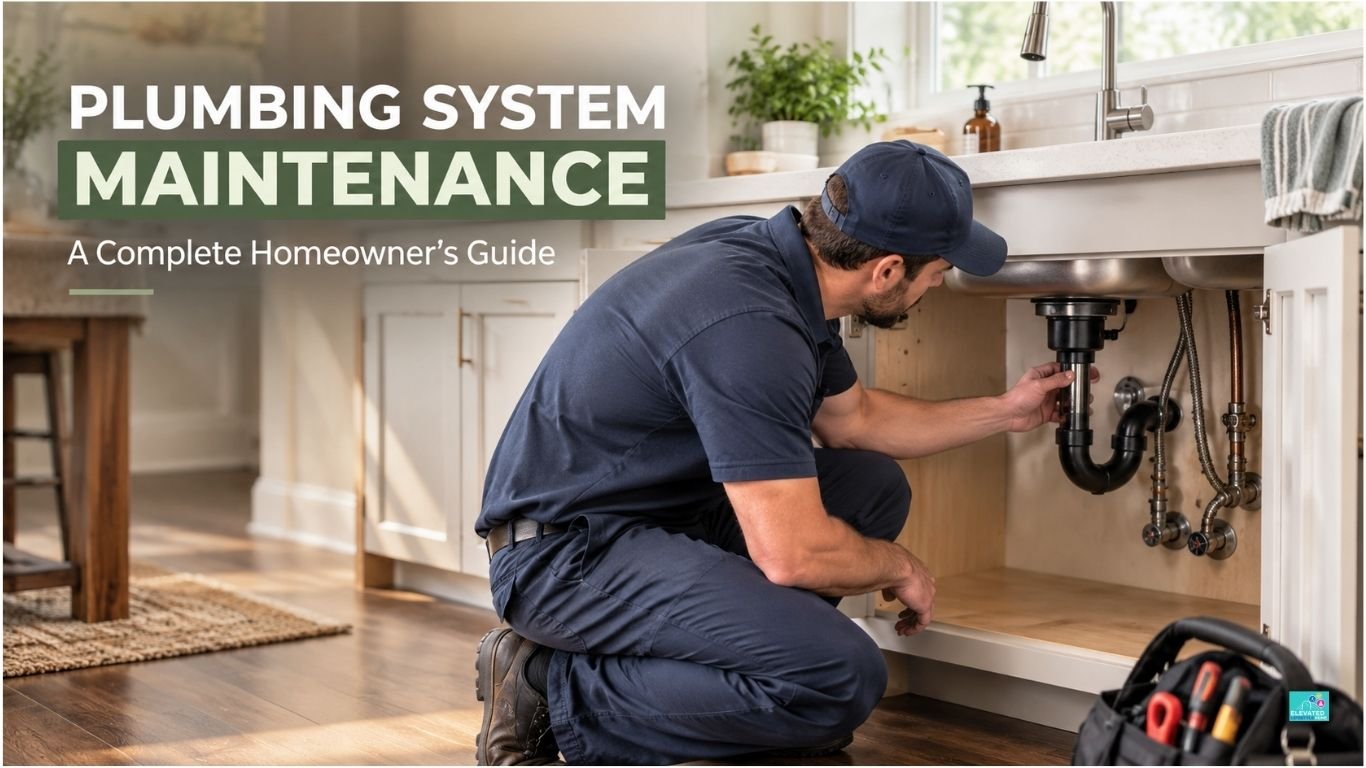
Small plumbing problems, such as dripping faucets, slow drains, and leaking pipes, can become expensive if they go unnoticed.
Regular plumbing system maintenance helps you spot these issues early, reduce unnecessary water waste, and keep everyday fixtures working properly.
You do not need to inspect every pipe yourself to care for your home’s plumbing. Start with simple checks, such as looking for moisture under sinks, testing toilets for silent leaks, and inspecting washing machine hoses for signs of wear.
More complex problems, including hidden pipe leaks and persistent drainage issues, may require a qualified plumber.
Following a plumbing maintenance checklist makes these tasks easier to organize alongside your other home-care routines.
In this guide, you will learn how to check for common leaks, care for drains and water heaters, monitor water pressure, protect vulnerable pipes, and recognize when professional help is the safer option.
Why Regular Plumbing Maintenance Matters
Your plumbing system supplies water to everyday fixtures and carries wastewater away through drainage pipes. Regular checks can help you notice small problems before they become more disruptive.
Because some pipes are hidden behind walls, beneath floors, or in other hard-to-reach spaces, not every leak is immediately visible.
However, damp patches, musty smells, discolored surfaces, dripping sounds, or an unexpected increase in water use may signal a problem.
A simple plumbing maintenance routine can help you:
- Spot leaks early: Check visible pipes, taps, toilet tanks, and the areas beneath sinks for signs of moisture.
- Reduce water waste: Repair dripping faucets and investigate toilets that continue to refill when they are not being used.
- Care for fixtures and appliances: Inspect accessible hoses and connections for wear, bulges, or leaks.
- Maintain suitable water pressure: Check for unusually high or low pressure and seek professional advice if it persists.
- Plan repairs more effectively: Keep a record of inspections and arrange professional help when a problem is beyond a simple check.
Routine maintenance cannot prevent every plumbing emergency, but it can help you identify warning signs and respond sooner.
Home Plumbing Maintenance Schedule
Use this schedule as a starting point and adjust it to your home’s plumbing system, local climate, and appliance manufacturers’ recommendations.
| Frequency | What to Check | What to Do |
|---|---|---|
| Monthly | Visible pipes, faucets, and areas under sinks | Look for drips, dampness, corrosion, or unusual odors |
| Every 3–6 months | Toilet tanks | Perform a food-coloring test to check for silent leaks |
| Every 3 months, where applicable | Sump pump | Test it according to the manufacturer’s instructions |
| Seasonally, before freezing weather | Outdoor faucets and exposed pipes | Disconnect hoses and follow the recommended winterizing steps |
| As recommended by the manufacturer | Water heater | Follow the model-specific maintenance instructions |
| Annually or when needed | Water pressure | Check static pressure if you have a suitable gauge and know how to use it |
| When warning signs appear | Drains and sewer line | Seek professional assessment for recurring clogs, backups, or suspected pipe damage |
Important: This is a general guide, not a fixed schedule for every home. Follow equipment instructions and local requirements. A professional sewer camera inspection is usually most useful when symptoms, the age of the line, or other known concerns justify it.
How to Inspect for Hidden Leaks (Signs, Tools & Tests)

Water leaks rarely start as dramatic geysers. They usually begin as slow seepages that weaken wood framing over several months. To perform a thorough leak check:
1. The Water Meter Baseline Test
One of the simplest plumbing maintenance tips is to check your water meter when no water is being used.
- Turn off faucets and make sure appliances that use water, such as washing machines and ice makers, are not running or filling.
- Record the meter reading or check its leak indicator.
- Avoid using water for about two hours, if practical.
- Check the meter again.
If the reading changes even though no water was used, there may be a leak or an overlooked source of water use. Repeat the check if needed.
If the reading continues to change, contact your water supplier or a qualified plumber for help identifying the cause.
A meter test can indicate possible water loss, but it does not identify the exact location of a leak.
2. The Toilet Tank Dye Test
A leaking toilet can waste water without leaving an obvious puddle. A simple food-coloring test can help you check whether water is leaking from the tank into the bowl.
- Remove the tank lid and drop five to six drops of dark food coloring into the water.
- Do not flush the toilet. Wait fifteen to twenty minutes.
- If colored water seeps into the lower toilet bowl, your rubber flapper is warped, hardened, or misaligned, allowing water to escape down the drain.
3. Under-Cabinet Leak Checks
Use a flashlight to inspect the cabinets beneath kitchen sinks, bathroom vanities, and laundry basins.
Look for:
- Drips or moisture around visible pipe connections
- Damp or swollen cabinet flooring
- Rust, corrosion, or mineral deposits around fittings
- Musty odors or water stains
Dry the area and check again later to see whether moisture returns. Do not tighten fittings automatically or force a connection that appears loose.
If you find an active leak, stop using the affected fixture and close its local shut-off valve if you can do so safely. For a persistent leak, damaged pipe, or uncertain connection, contact a qualified plumber.
For additional guidance on checking household leaks, toilet flappers, faucets, and water pressure, see the EPA’s WaterSense home maintenance recommendations.
Drain Maintenance: Safe DIY Clearing

Slow-draining sinks and showers are often caused by hair, soap residue, grease, or other debris. Start with simple methods that suit the fixture before trying a chemical product.
Practical Ways to Clear Minor Clogs
- Remove visible debris: Clear hair and residue from accessible drain covers or stoppers.
- Try a suitable plunger: Use one designed for the sink or toilet you are clearing, following its instructions.
- Use a manual drain tool: A suitable plastic hair remover can help clear accessible hair clogs in bathroom drains.
- Know when to stop: If the clog persists, several fixtures drain slowly, or wastewater backs up into another drain, contact a plumber.
Drain Cleaner Safety
If you choose a chemical drain cleaner, read and follow the product label carefully. Never mix drain cleaners with each other, bleach, or other household chemicals.
Chemical residue can cause burns or splash injuries, so do not plunge or dismantle a drain after using a product unless its instructions specifically say it is safe.
If a chemical has already been poured into a blocked drain, tell the plumber what product was used before they begin work. Avoid handling the liquid or opening the pipe yourself.
Cleaning a Sink P-Trap
Removing a P-trap can release trapped water and chemical residue. If you are not familiar with the process, use a simpler cleaning method or call a plumber. Never force old fittings, and check carefully for leaks after any permitted maintenance work.
Water Heater Maintenance and Sediment Care

Whether you have a standard gas or electric storage water heater, mineral deposits—primarily calcium carbonate—naturally settle out of hard water and gather at the bottom of the tank.
Over time, this sediment forms a thick layer of scale that insulates the water from the burner, leading to popping sounds, higher energy bills, and early tank failure.
Sediment buildup and maintenance needs vary by water heater model and local water conditions. Check your manufacturer’s instructions before draining the tank or testing a temperature and pressure relief valve.
Water may be extremely hot, so do not attempt a procedure unless you understand the required safety steps. Contact a qualified technician if you are unsure.
Water Heater Maintenance: What to Check
Check your water heater’s manual for the recommended maintenance schedule and the correct procedure for your model. Inspect visible connections for leaks or corrosion, and pay attention to unusual noises or changes in hot-water supply.
Draining a tank or testing a temperature and pressure relief valve can involve extremely hot water and other hazards. If you are unsure about the procedure, contact a qualified technician rather than attempting it yourself.
Pipe Protection: Corrosion Checks & Winter Freeze Prevention
Water expands as it freezes. If water freezes inside a vulnerable pipe, the resulting pressure can cause the pipe to split. Uninsulated pipes along exterior walls, in unheated crawl spaces, and in drafty areas are particularly vulnerable.
Winterizing Pipes Before Cold Weather Arrives:
- Disconnect Exterior Garden Hoses: Leaving a hose attached to an outdoor spigot traps water inside the sillcock barrel.
In freezing weather, water trapped in an outdoor faucet or connected pipe can increase the risk of a burst pipe, so follow the recommended winterizing procedure for your plumbing system. - Shut Off Interior Hose Bib Valves: If your home has dedicated interior shut-off valves for outdoor faucets, close them in the autumn and open the exterior spigot to drain residual water.
- Install Foam Pipe Sleeves: Slide pre-slit polyethylene foam insulation over exposed copper and PEX lines in garages, crawl spaces, and basements.
- Keep Cabinet Doors Ajar During Freezing Weather: During prolonged cold snaps, opening kitchen and bathroom vanity doors can allow warmer indoor air to circulate around vulnerable pipes, where appropriate.
Fixture & Appliance Maintenance: Garbage Disposals, Toilets & Sump Pumps
A plumbing preventative maintenance routine also includes checking the household fixtures and appliances that use water:
- Garbage Disposals: Avoid putting fibrous vegetables, coffee grounds, cooking oils, or other unsuitable materials down the disposal.
For routine cleaning, follow the manufacturer’s care instructions and use cold running water while operating the unit. Never place your hand inside the disposal opening. - Sump Pump Reliability: Basement sump pumps sit idle for months until heavy spring rains arrive. Test the sump pump at the interval recommended by its manufacturer, using the specified procedure to confirm that it starts and discharges water correctly.
- Washing Machine Water Supply Hoses: Inspect inlet hoses regularly for bulges, kinks, cuts, wear, or leaks.
Some manufacturers recommend replacing inlet hoses about every five years; follow your washer manufacturer’s instructions and replace damaged hoses sooner.
For a broader routine covering washing machines and other household appliances, see our appliance maintenance checklist.
Water Pressure Testing & Safety Controls

Water pressure affects how water reaches your faucets, showers, and appliances. Pressure that is consistently too high or too low may indicate a problem that needs attention. The appropriate range depends on local requirements and your plumbing system.
How to Check Static Water Pressure
- Use a suitable pressure gauge that matches the connection you are testing.
- Make sure faucets and water-using appliances are not running.
- Attach the gauge securely according to its instructions.
- Open the water supply to the gauge and record the reading.
- If the pressure is repeatedly outside the recommended range, ask a qualified plumber to assess the system.
In many residential plumbing systems, pressure above 80 PSI warrants attention, but local codes and system requirements should guide the assessment. Do not adjust a pressure-reducing valve unless you know how to do so safely.
A pressure gauge provides a reading; it cannot diagnose every cause of pressure problems, such as a faulty valve, restricted pipe, or supply issue.
Safe DIY Plumbing Checks vs. When to Call a Plumber
Some basic plumbing checks are suitable for homeowners, while other repairs require experience, specialized tools, or professional assessment.
Simple Tasks Many Homeowners Can Do
- Check visible pipes and connections for moisture.
- Test toilet tanks for silent leaks using food coloring.
- Remove accessible hair and debris from drain covers.
- Clean faucet aerators according to the manufacturer’s instructions.
- Inspect washing machine hoses for bulges, cracks, and leaks.
- Record water meter readings and check static water pressure when safe and appropriate.
When to Contact a Qualified Plumber
- A leak continues after the affected fixture is turned off.
- Water stains, damp walls, or musty smells suggest a hidden leak.
- Several drains are slow or wastewater backs up into another fixture.
- Water pressure is persistently abnormal.
- A pipe, shut-off valve, or fitting is damaged or corroded.
- You are unsure how to safely maintain a water heater or its safety components.
Gas appliances, concealed pipe repairs, major sewer problems, and work that is regulated by local codes should be handled by appropriately qualified professionals. If a leak is severe, shut off the main water supply if you can do so safely and arrange urgent help.
How Regular Plumbing Maintenance Can Help Save Money
Repair costs depend on the problem, the parts needed, and local labor rates. Regular checks can help you notice some issues sooner. Checking for leaks and worn hoses regularly may help you catch problems before they lead to larger repairs.
| Maintenance Task | Potential Benefit |
|---|---|
| Checking for visible leaks | Helps identify water loss before it goes unnoticed for too long |
| Testing toilet tanks | Helps detect silent leaks that may waste water |
| Inspecting washing machine hoses | Helps spot wear or damage before a hose fails |
| Monitoring water pressure | Helps identify pressure that may need professional attention |
| Following water heater maintenance instructions | Helps keep the appliance maintained according to its design |
| Protecting exposed pipes in cold weather | Helps reduce the risk of freeze-related damage |
Actual savings depend on the condition of your plumbing system and the repairs required. Keep a record of checks and repair dates so you can track recurring problems and plan future maintenance.
Final Thoughts: Keep Your Plumbing in Good Condition
Plumbing system maintenance does not have to be complicated. A regular look beneath sinks, a simple toilet leak test, and periodic inspections of visible pipes and appliance hoses can help you notice common warning signs.
Start with one small task: check the areas beneath your sinks for moisture and inspect your washing machine hoses for wear.
Make sure everyone in your household knows where the main water shut-off valve is located. For persistent leaks, recurring drain problems, or water heater maintenance you are unsure how to perform, seek qualified professional help.
Keep a note of what you check and any repairs you make. That way, you can spot recurring problems and know when to call a plumber.
FAQs About Plumbing System Maintenance
1. What is included in plumbing system maintenance?
Plumbing maintenance includes checking visible pipes and fixtures for leaks, testing toilets for silent water loss, inspecting appliance hoses, monitoring water pressure, and following the recommended care instructions for water heaters and other plumbing equipment.
2. How often should plumbing maintenance be done?
Check visible plumbing areas regularly, inspect accessible appliance hoses, and test toilet tanks periodically. Seasonal tasks depend on your climate, while water heater maintenance should follow the manufacturer’s instructions. Arrange professional inspections when warning signs or recurring problems appear.
3. How can I check for hidden water leaks?
Turn off water-using fixtures and appliances, record your water meter reading, and check it again after a period when no water has been used. If the reading changes, investigate possible water use or a leak. Damp patches, musty smells, and unexplained increases in water use are other warning signs.
4. What are common signs of plumbing problems?
Common warning signs include dripping faucets, slow drains, damp cabinets, water stains, unusual pipe noises, inconsistent water pressure, and an unexplained increase in water use.
5. How can I create a plumbing maintenance checklist?
Divide tasks into regular inspections, periodic leak tests, seasonal checks, and manufacturer-recommended appliance maintenance. Record the date, any problems found, and the action taken. A home maintenance spreadsheet can help keep the routine organized.
6. Which plumbing tasks can homeowners do themselves?
Many homeowners can inspect visible pipes, test toilet tanks with food coloring, clean accessible drain covers, and check appliance hoses. Repairs involving hidden leaks, damaged fittings, gas appliances, or unfamiliar water heater procedures may require professional assistance.
7. How should a water heater be maintained?
Follow the maintenance schedule and safety instructions for the exact water heater model. Depending on the unit, maintenance may include sediment removal or inspection of safety components. Contact a qualified technician if you are unsure how to carry out a procedure safely.
8. Why should exposed pipes be insulated?
In cold climates, suitable insulation can help protect vulnerable pipes from freezing. Insulation can also reduce heat loss from hot-water pipes. Choose insulation appropriate for the pipe and location, and follow the product instructions.
9. How can I check my home’s water pressure?
Use a suitable pressure gauge according to its instructions while water-using fixtures are off. Compare the reading with your local requirements and plumbing system specifications. If pressure is persistently high or low, ask a qualified plumber to investigate.
10. What should a home plumbing maintenance checklist include?
Include checks for visible leaks, toilet tank leaks, appliance hose condition, drain performance, water pressure, exposed pipes, and water heater maintenance requirements. Add seasonal tasks where relevant and record any repairs or professional inspections.
