
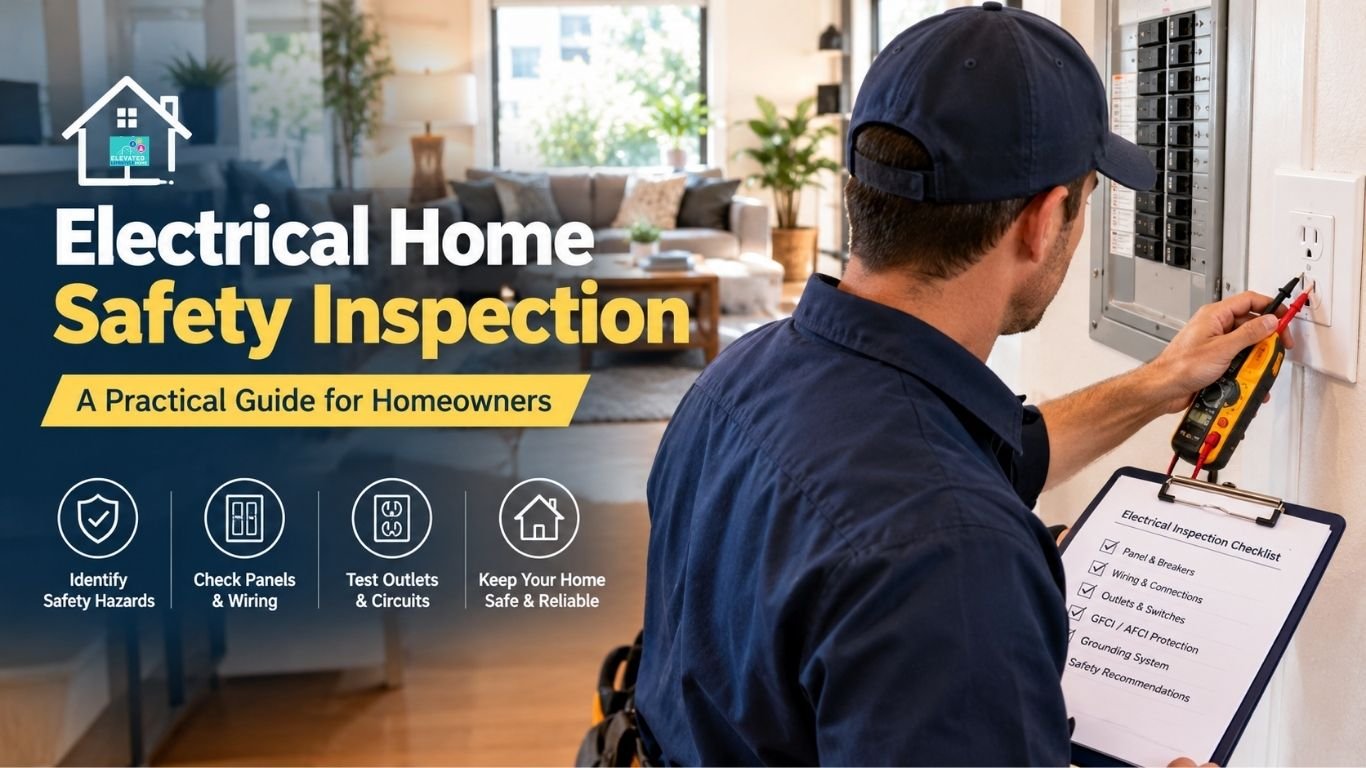
Modern households rely on electricity around the clock. Between powering major kitchen appliances, running central HVAC systems, and charging phones and laptops in every room, our electrical panels work harder than ever before.
Because wiring sits hidden behind drywall, it is easy to assume that if the lights turn on, everything is working safely.
But an electrical system can develop problems over time, even when everything appears to be working normally.
Loose connections can overheat, older components can deteriorate, and aging homes may struggle with the demands of modern appliances and electronic devices.
Scheduling an electrical home safety inspection can help identify electrical hazards before they become more serious problems.
Electrical checks are also easier to manage when you keep them with your other recurring home maintenance tasks. You can use this home maintenance checklist Excel tracker to keep important maintenance tasks in one place.
Whether you are buying a previously owned house, planning a remodel, or noticing warning signs like flickering overhead lights, this comprehensive guide explains how a professional home electrical inspection works, what an electrician checks, and how to spot safety hazards before they become dangerous.
What Is an Electrical Home Safety Inspection?

An electrical home safety inspection is a detailed, top-to-bottom assessment of your entire residential electrical system conducted by a qualified electrician.
Rather than simply verifying that a wall switch turns on a fixture, the inspector evaluates the electrical system for applicable electrical-code requirements, local requirements, safety concerns, and installation issues.
The primary goal is finding hidden fire, shock, and electrocution hazards before they cause property damage or personal injury.
During a standard safety inspection, an electrician evaluates:
- The Main Electrical Service Panel: Checking breaker conditions, service wire sizing, grounding electrode systems, and looking for signs of dangerous thermal arcing.
- Branch Circuit Wiring: Confirming that the correct wire gauges are paired with matching breaker amperages (e.g., 14-gauge wire on 15-amp breakers; 12-gauge wire on 20-amp breakers).
- Shock & Life-Safety Devices: Testing Ground-Fault Circuit Interrupters (GFCIs) and Arc-Fault Circuit Interrupters (AFCIs) to verify that the protective devices trip appropriately when the conditions they are designed to detect occur.
- Receptacles & Switches: Checking accessible receptacles and switches for proper grounding, polarity, secure connections, and visible signs of damage.
- Surge & Environmental Protection: Inspecting whole-home surge suppression, outdoor weatherproof covers, and dedicated appliance circuits.
When and How Often Should You Schedule an Electrical Inspection?
Electrical systems do not require daily attention, but they should be assessed at regular milestones. You should arrange a professional inspection under the following conditions:
- When Buying a Home: A standard home inspection may not provide the same level of electrical assessment as a dedicated inspection by a qualified electrician.
If you have concerns about the electrical system, consider a professional electrical inspection. - For Older Homes: If your home is more than 40 years old, consider having the electrical system professionally inspected, especially if it has not been evaluated recently. An inspection is also appropriate after major renovations, additions, or the installation of major new electrical equipment.
- After Major Renovations or Additions: Adding a finished basement, remodeling a kitchen, or installing high-draw equipment (like an EV car charger, hot tub, or heat pump) places new demands on your panel that require code verification.
- Following Severe Weather or Direct Lightning Strikes: If lightning, a utility surge, or severe weather is followed by unusual electrical behavior, a qualified electrician can assess the system for possible damage.
Electrical Safety Checklist: What Homeowners Can Safely Check

While working inside service panels or opening electrical junction boxes should always be left to qualified professionals, you can perform a safe visual electrical safety check using this straightforward homeowner checklist. For additional consumer safety guidance, see the Home Electrical Safety Checklist.
1. Living Areas & Bedrooms
- Visually Check Outlets and Switches: Look for discoloration, scorching, cracks, or other visible damage. If an outlet or switch feels unusually warm, stop using it and have a qualified electrician inspect it.
- Check for Frayed or Pinched Cords: Inspect all visible lamp and appliance cords. Discard cords with cracked outer rubber, exposed copper strands, or cords trapped tightly beneath heavy furniture legs.
- Eliminate Permanent Extension Cords: Extension cords are designed strictly for temporary use. If an appliance remains plugged into an extension cord indefinitely, install a dedicated wall outlet instead.
2. Kitchens & Bathrooms
- Test GFCI Receptacles: Use the “TEST” button on GFCI receptacles in wet or potentially damp areas according to the manufacturer’s instructions. The power should shut off when the test works correctly; press “RESET” afterward to restore power.
- Verify Countertop Clearance: Keep electrical appliances (toasters, blenders, electric kettles) away from standing water around the kitchen sink.
- Check for Dedicated Circuits: Many high-load appliances require dedicated circuits, depending on the appliance specifications and local electrical requirements.
A qualified electrician can confirm whether an appliance needs its own circuit. For broader appliance care beyond electrical safety, see our appliance maintenance checklist
3. Basements, Garages & Attics
- Inspect Exposed Cable Runs: In unfinished basements or attics, visually scan exposed electrical cables running across joists.
Look for visible damage, loose or improperly supported cable runs, or signs of rodent damage. Do not touch or reposition electrical wiring yourself. - Check Outdoor Weatherproof Covers: Check that exterior receptacles have weather-resistant covers appropriate for their location and use, and that the covers are not cracked or damaged.
- Inspect the Panel Area: Keep the space in front of the electrical panel clear and unobstructed so a qualified electrician can safely access it.
10 Critical Warning Signs of Faulty Wiring in Your Home

Electrical problems rarely appear without warning. Learning how to recognize the warning signs of faulty wiring helps you catch small electrical faults before they turn into structural fire hazards:
- Flickering or Dimming Lights: If overhead lights dim or flicker when large appliances start, the circuit may be overloaded or there may be another electrical problem that needs professional evaluation.
- Scorched or Discolored Outlets: Brown, black, or melted plastic around outlet plug slots can indicate overheating, a poor connection, or another electrical fault. Stop using the outlet and have a qualified electrician inspect it.
- A Persistent Fishy or Burning Plastic Odor: A persistent burning, acrid, or unusual electrical smell near an outlet, switch, or appliance can indicate overheating or another electrical problem.
If you notice this odor near an outlet, switch, or other electrical component, stop using the affected area and contact a qualified electrician. If it is safe to do so, turn off the affected circuit. - Buzzing, Sizzling, or Popping Sounds: Electricity should flow silently. A distinct buzzing, sizzling, or popping sound from an outlet, switch, or electrical fixture can indicate arcing, a loose connection, or another electrical fault.
- Frequently Tripping Breakers: Repeatedly tripping breakers can indicate an overloaded circuit, short circuit, ground fault, or another electrical problem.
If a breaker trips frequently, have a qualified electrician investigate the cause rather than repeatedly resetting it. - Mild Electric Shocks or Tingling: If touching a metallic appliance casing or switch plate causes a shock or tingling sensation, treat it as a warning sign and stop using the equipment until a qualified electrician can identify the cause.
- Loose-Fitting Receptacles: If plugs fall out of an outlet or slide halfway out on their own, internal spring contacts are worn out.
A loose-fitting receptacle can indicate worn internal contacts, which may contribute to poor electrical contact and heat buildup. - Ungrounded Two-Prong Outlets: Older outlets with only two slots lack a dedicated equipment grounding connection. Have them evaluated by a qualified electrician, especially before connecting modern equipment that requires grounding.
- Breakers That Will Not Reset: If a circuit breaker immediately trips again after being reset, there may be a short circuit, ground fault, overload, or another electrical problem. Do not repeatedly reset it; have a qualified electrician investigate the cause.
- Rodent Activity Near Wiring: Rodents can damage wire insulation in attics, basements, crawl spaces, and other areas, potentially exposing conductors and creating a safety hazard.
The Core Component: A Closer Look at the Electrical Panel Inspection

Your electrical panel is the central distribution point for your home’s electrical circuits and an important part of its protection system. A detailed electrical panel inspection is an important part of a professional assessment.
Illustration only: The panel layout and breaker ratings shown below are examples. Actual electrical panels, circuit assignments, and service sizes vary by home and should be evaluated by a qualified electrician.
        +-------------------------------------------------------------+
                 MAIN ELECTRICAL SERVICE PANEL

      [MAIN BREAKER: 100A - 200A Service Disconnect]

           +--------------------+             +--------------------+

  | [15A] Lighting     |             | [20A] Kitchen GFCI    |
  | [15A] Bedrooms     |             | [20A] Bathrooms    |
  | [20A] Living Room  |             | [30A] Dryer (240V)    |
  | [15A] Smoke Alarms |             | [50A] Range (240V)  |
  | [20A] Garage GFCI  |             | [40A] A/C Condenser  |

          +--------------------+             +--------------------+

  * Copper Bus Bars: Inspected for oxidation & arc pitting
  * Neutral & Grounding Bus: Verified separated/bonded
  * AFCI/GFCI Breakers: Mechanically & electrically tested
  * Wire Sizing: Confirmed gauge matches breaker amperage

         +-------------------------------------------------------------+
During the panel inspection, a qualified electrician may remove the dead-front protective cover to evaluate components that homeowners should never touch:
- Thermal Imaging Scan: Using an infrared camera, the technician scans the panel bus bars and breaker terminal screws.
Thermal imaging can help identify abnormal heat patterns that may warrant further investigation, including possible loose connections or overloaded components. - Breaker Amperage Verification: Technicians verify that former homeowners did not install oversized breakers.
For example, a 20-amp breaker installed on 14-gauge wire can allow the circuit to carry more current than the wiring is designed to handle, increasing overheating risk. - Obsolete Panel Identification: The technician checks whether your home uses outdated service panels such as Federal Pacific Electric (Stab-Lok) or Zinsco panels, which have been the subject of longstanding safety concerns and should be evaluated by a qualified electrician if present.
Older Homes: Knob & Tube, Aluminum Wiring, and Hidden Risks
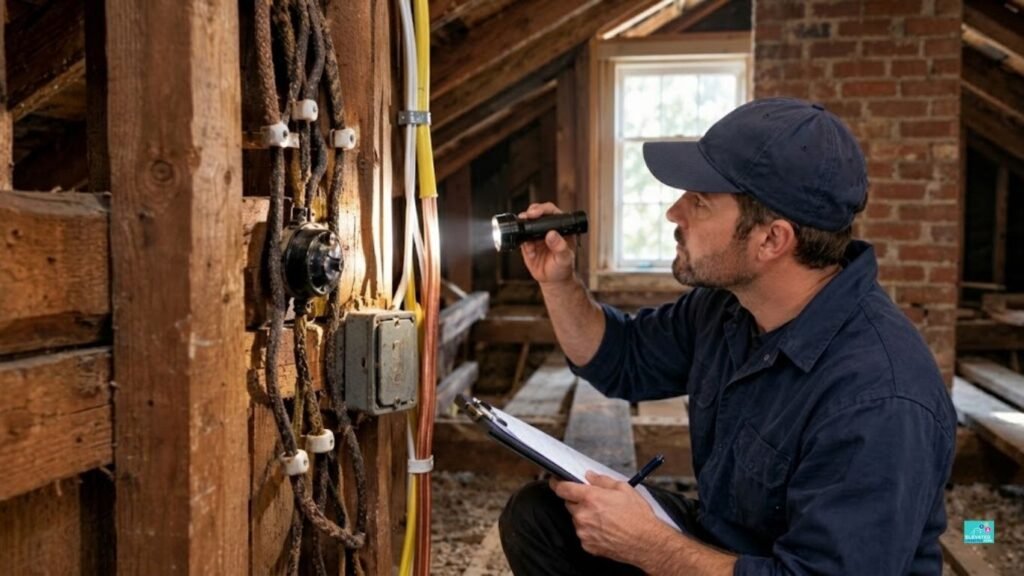
Properties built before 1980 can present unique safety challenges that make a specialized home electrical inspection especially valuable. For additional guidance on older-home wiring hazards, see these home wiring safety tips
| Wiring Era / Type | Visual Identification | Key Safety Risks | Recommended Modern Solution |
| Knob-and-Tube (Pre-1950) | Black cloth-sheathed wires suspended on white ceramic knobs through joists | Lacks a ground wire; dry, brittle cloth insulation; fire hazard if covered by modern blown-in attic insulation | Have a qualified electrician evaluate the system and determine whether repair, modification, or rewiring is appropriate. |
| Solid Aluminum Wiring (1965–1973) | Marked “AL” or “ALUMINUM” on cable jackets; silver-colored conductors | High thermal expansion rate causes loose terminal connections, oxidation, and severe outlet fire risks | Have a qualified electrician evaluate the connections and determine whether an approved repair method, such as COPALUM or AlumiConn, is appropriate. |
| Ungrounded NM Cable (1950–1965) | Rubber or early woven-cloth jacket; two-prong receptacles throughout | No dedicated ground path; cannot safely discharge stray currents from three-prong modern appliances | A qualified electrician can determine whether GFCI protection or another approved solution is appropriate for the existing circuit. |
| Modern NM-B Copper (Common in newer construction) | Color-coded vinyl jackets (White: 14 AWG, Yellow: 12 AWG, Orange: 10 AWG) | Generally very safe; risks are limited to physical wire damage, loose terminal screws, or DIY overloads | Maintain the wiring according to applicable electrical codes, and have a qualified electrician determine whether AFCI protection or other updates are appropriate. |
Cost ranges are general U.S. planning estimates and can vary significantly by location, home size, electrician rates, inspection scope, permits, and project complexity.
For current reference ranges, see HomeAdvisor’s electrical inspection cost guide and Angi’s electrical inspection cost guide.
Safe Homeowner Maintenance vs. Jobs for a Qualified Electrician
Knowing where DIY boundaries lie is essential for personal safety and code compliance. Working around residential electricity carries inherent risks; even when the main breaker is turned off, parts of the service equipment can remain energized. Homeowners should never remove the panel cover or work inside the panel.
What Homeowners Can Safely Handle
- Testing and resetting exterior and indoor GFCI receptacles using their built-in test buttons.
- Replacing cracked, cosmetic plastic wall cover plates (using non-conductive tools).
- Changing standard light bulbs and replacing smoke detector 9-volt backup batteries.
- Mapping and neatly labeling breakers inside the panel door index chart.
- Resetting a standard circuit breaker only when the cause is understood and it can be done safely. If the breaker trips again, stop resetting it and contact a qualified electrician.
What Requires a Qualified Electrician
- Removing the main front metal panel cover to inspect bus bars, neutral bars, or internal wiring.
- Replacing, adding, or sizing circuit breakers.
- Running new electrical circuits through walls, attics, or crawl spaces.
- Diagnosing the root cause of persistent breaker trips, buzzing sounds, or scorched receptacles.
- Installing 240-volt dedicated lines for heavy appliances, EV car chargers, or central HVAC units.
- Remediating historical knob-and-tube or aluminum branch circuits.
How Much Does an Electrical Safety Inspection Cost?
Electrical inspection costs vary widely depending on location, the electrician, the scope of the inspection, and whether additional diagnostic work or repairs are needed. The ranges below are general U.S. estimates rather than fixed prices.
| Electrical Inspection & Service Scope | Average Cost Range | What the Service Delivers |
| Standard Residential Electrical Inspection | $100–$200 | Basic inspection of wiring, outlets, circuit breakers, panels, and common electrical safety concerns |
| Infrared / Thermal Imaging Inspection | $150–$350 | Infrared scanning to identify unusual heat patterns or potential hot spots that may require further investigation |
| Full-Home Electrical Inspection | $250–$400 | Comprehensive assessment of the home’s electrical system, including wiring, outlets, panels, circuits, and protective devices |
| Electrical Panel Upgrade | $1,000–$4,500 | Professional panel upgrade or replacement, with final cost depending on amperage, wiring, permits, and project complexity |
| GFCI Outlet Installation or Replacement | $130–$300 per outlet | Professional GFCI outlet installation or replacement; location, wiring needs, permits, and outdoor installation can affect the cost |
| Whole-Home Surge Protector Installation | $70–$700 | Installation of a panel-mounted surge protection device; panel condition and installation complexity can affect the total cost |
How to Prioritize Repairs After Receiving Your Inspection Report
Once your electrician completes their evaluation, you will receive an itemized inspection summary. Prioritize needed fixes in three clear stages:
Tier 1: Immediate Safety Hazards
Address these issues promptly and follow the electrician’s instructions about whether the affected circuit or equipment should remain out of service until repaired.
- Have older panels with known safety concerns, such as Federal Pacific Electric (Stab-Lok) or Zinsco equipment, evaluated by a qualified electrician and follow their recommendation for repair or replacement.
- Fixing active scorch marks, buzzing receptacles, or direct hot-to-ground faults.
- Eliminating exposed bare copper conductors in accessible areas.
Tier 2: Address Promptly After Professional Assessment
Note: Electrical-code requirements vary by location and the code edition adopted by your local authority, so a qualified electrician should confirm which GFCI and AFCI protections apply to your home.
- Installing GFCI receptacles in kitchens, bathrooms, unfinished basements, and outdoor locations.
- Adding dual-function AFCI/GFCI breakers to protect bedroom and living room branch circuits.
- Correcting open grounds or reversed hot/neutral polarity on standard three-prong outlets.
Tier 3: Plan as Part of Long-Term Electrical Improvements
- Evaluating whether an older 60-amp or 100-amp electrical service needs an upgrade to meet the home’s current and planned electrical demand.
- Installing a whole-home surge protector at the main service entrance.
- Adding dedicated 20-amp branch circuits for modern home offices or kitchen appliances.
If you are also planning broader household repairs, our home repair and improvement guide can help you think through other maintenance and improvement projects.
For electrical issues, however, follow the electrician’s recommendations and local code requirements.
Final Thoughts: Protecting Your Home from the Inside Out
Your electrical system is easy to overlook when everything appears to work normally. Regular attention and professional evaluation when warning signs appear can help identify electrical problems before they become more serious or costly.
A thorough electrical home safety inspection can help identify wiring, panel, grounding, and circuit issues that may need attention, giving you a clearer picture of your home’s electrical condition.
This guide is for general homeowner education and is not a substitute for an inspection or advice from a qualified electrician.
When was the last time a professional evaluated your home’s electrical panel? Have you noticed flickering lights or loose outlets in your living spaces? Share your questions below—we are always here to help you keep your home safe!
Q1: What is an electrical home safety inspection?
An electrical home safety inspection is a professional assessment of your home’s electrical panel, wiring, outlets, grounding, and protective devices. A qualified electrician looks for safety hazards, installation problems, and conditions that may need repair or updating based on applicable electrical codes and local requirements.
Q2: How often should I get an electrical inspection for my house?
There is no single inspection interval that applies to every home. Consider a professional inspection when buying a previously owned home, when a home is 40 years or older, after a major renovation or addition, after adding major electrical equipment, or when you notice warning signs such as flickering lights, buzzing, overheating, or frequently tripping breakers.
Q3: What are the top warning signs of faulty wiring?
The most critical red flags are warm or discolored outlet plates, persistent burning plastic odors, frequently tripping breakers, buzzing wall switches, flickering lights, and loose outlets where plugs fall out on their own.
Q4: What is the difference between a GFCI and an AFCI breaker?
A GFCI helps protect against electrical shock by interrupting power when it detects a ground fault. An AFCI helps reduce fire risk by detecting certain dangerous arcing conditions in electrical circuits.
Q5: Can I Check My Home’s Electrical Safety Myself?
Homeowners can perform basic visual checks, such as inspecting cords and outlets, testing GFCI receptacles according to the manufacturer’s instructions, and looking for signs of overheating or damage. However, panel covers, live wiring, internal electrical components, and fault diagnosis should be handled by a qualified electrician.
Q6: What does an electrician look for during an electrical panel inspection?
An electrician may inspect the panel for signs of overheating, incorrect breaker sizing, damaged components, grounding or bonding issues, loose connections, and outdated equipment. The exact inspection scope depends on the home and the type of assessment being performed.
Q7: How much does a typical home electrical inspection cost?
The cost depends on the size of the home, inspection scope, location, and electrician. Current U.S. cost guides put a standard electrical inspection at roughly $100–$200, while a broader full-home electrical inspection may cost around $250–$400. Homeowners should request a local quote because actual prices can vary considerably.
Q8: Are older homes with knob-and-tube or aluminum wiring safe?
Knob-and-tube and aluminum branch-circuit wiring can present additional safety concerns depending on their condition, modifications, connections, and how the system is being used. An inspection by a qualified electrician can determine whether repairs, monitoring, or replacement is appropriate.
Q9: Why does my circuit breaker keep tripping repeatedly?
A circuit breaker can trip because of an overloaded circuit, short circuit, ground fault, or another electrical problem. If the breaker repeatedly trips or trips again immediately after resetting, stop repeatedly resetting it and have a qualified electrician investigate the cause.
Q10: What is a whole-home surge protector, and do I need one?
A whole-home surge protector is installed at the electrical service or distribution panel to help protect connected equipment from certain transient voltage surges. Whether you need one depends on your home’s electrical system, equipment, local conditions, and the level of protection you want. A qualified electrician can recommend an appropriate solution.

