
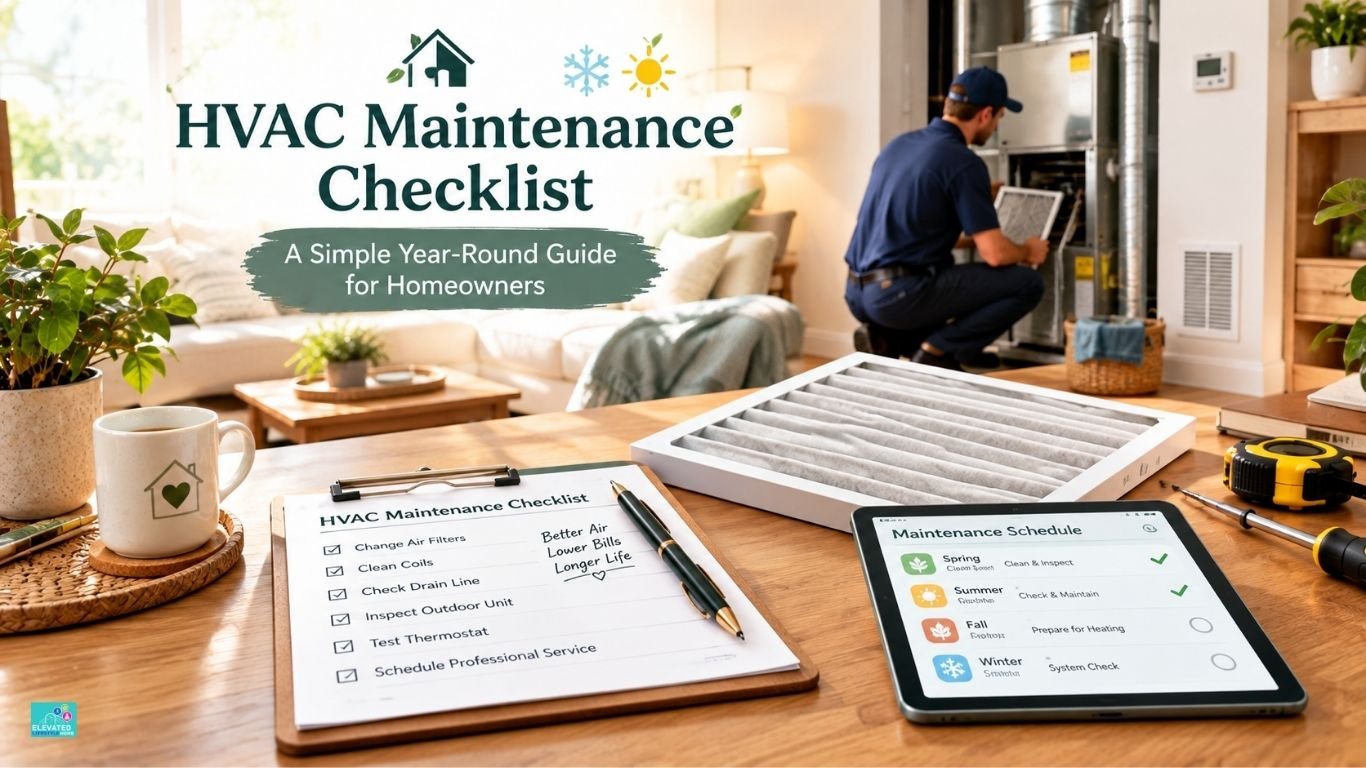
Emergency HVAC repairs can become expensive, especially when major components fail or service is needed during peak demand.
Many HVAC problems can be linked to neglected maintenance, restricted airflow, dirty components, drainage issues, or normal component wear.
Dirt can build up on indoor coils, restricted airflow can increase strain on blower components, and clogged drain lines can cause water to back up or trigger safety controls.
You can also organize HVAC tasks alongside your other seasonal home-care tasks using a home maintenance checklist Excel tracker.
By tackling simple, manageable tasks throughout the year and knowing when to call a professional technician, you keep your system running reliably, protect your monthly utility budget, and keep your family comfortable in every season.
What Is an HVAC Maintenance Checklist?
An HVAC checklist for maintenance is a scheduled care plan designed to help keep your heating, ventilation, and air conditioning equipment operating efficiently.
Rather than waiting for your unit to blow warm air during summer or rattle noisily in the middle of the night, this routine focuses on inspecting, cleaning, and testing core components before extreme weather arrives.
A comprehensive checklist divides your system care into clear, logical steps:
- Airflow & Filtration: Inspecting and replacing air intake filters to ensure your blower motor does not overheat or starve for return air.
- Indoor Air Quality & Drainage: Clearing the condensate drain line of algae sludge, verifying thermostat accuracy, and wiping accessible vent covers.
- Outdoor Condenser Care: Rinsing dust, dirt, and lawn debris from external aluminum fins and maintaining adequate airflow clearance around the compressor unit.
- Safety & Electrical Integrity: Checking thermostat calibration, inspecting accessible wiring, and leaving high-voltage capacitor tests and heat exchanger evaluations to licensed technicians.
Why Regular HVAC Maintenance Matters for Every Homeowner
Your heating and cooling system works harder than almost any other mechanical setup on your property. Setting up a reliable HVAC preventative maintenance checklist provides immediate, practical benefits for your home and wallet:
- Lowers Monthly Energy Bills: When filters and coils get caked with household dust, your system has to run longer cycles to reach the temperature set on the wall.
Keeping airflow unobstructed allows your unit to hit its target temperature quickly without wasting electricity or gas. - Prevents Premature System Failures: Heating and cooling components operate under high pressure and temperature.
Routine checks catch failing contactor switches, loose fan belts, or dirty blower wheels before they cause total compressor or motor burnout. - Protects Indoor Air Quality: Your ventilation system continuously recirculates the air your family breathes.
Regularly checking and changing filters traps pollen, dust mites, and pet dander, which can help reduce the amount of airborne particles circulating through the home. - Helps Reduce the Risk of Water Damage: Air conditioning units pull gallons of moisture out of humid indoor air every day.
If the plastic condensate drain line clogs with algae, standing water can overflow the internal drip pan and ruin drywall, ceilings, or finished basement floors.
For a deeper explanation of the benefits of routine HVAC care, see our guide to why HVAC maintenance is important.
How Often Should an HVAC System Be Serviced?

A balanced care routine combines routine homeowner tasks with professional servicing. For standard residential setups in the United States, you should follow this maintenance rhythm:
Homeowner DIY Checks (Every 30 to 90 Days)
Check your air filter once a month, especially during peak summer cooling and winter heating months.
Rinse off the exterior condenser casing if grass clippings or autumn leaves gather along the sides, and pour a cup of distilled white vinegar down the condensate drain line every few months to stop algae clogs before they start.
Professional Inspections (Seasonal / As Recommended)
A full preventive maintenance HVAC checklist can include professional checkups before the cooling and heating seasons.
For many homeowners, this means scheduling cooling-system maintenance in spring and heating-system maintenance in fall, while also following the equipment manufacturer’s recommendations.
Certified technicians handle safety-critical checks that require specialized tools, such as measuring refrigerant pressures, testing electrical capacitors under load, and checking the furnace heat exchanger for dangerous hairline cracks that could leak carbon monoxide into your living spaces.
Using an HVAC preventive maintenance checklist helps you keep both DIY tasks and professional service visits organized while following the maintenance recommendations provided by your equipment manufacturer.
Key Components of Your Home HVAC System
Understanding the main parts of your heating and cooling setup makes routine care much less intimidating. Your system relies on five critical components working together:
- Evaporator Coil (Indoor Unit): Located inside your air handler or furnace cabinet, this coil absorbs heat and moisture from your home’s indoor air during the summer. If it gets coated in dust, cooling slows down, and ice can form across the copper tubing.
- Condenser Coil & Compressor (Outdoor Unit): The outdoor unit releases the heat collected from inside your house. Because it sits outside year-round, its aluminum fins easily get clogged with grass clippings, leaves, and dirt.
- Blower Fan & Motor: Housed in the indoor unit, the blower pulls return air through your filter and pushes conditioned air through your supply vents. Keeping the blower wheel free of dust prevents motor strain and uneven airflow between rooms.
- Condensate Drain Line & Pan: As your air conditioner cools, it extracts gallons of humidity from the air each day.
This water drips into a collection pan and flows out of your home through a white PVC pipe. For broader water-system care, see our guide to plumbing system maintenance. - Thermostat & Heat Exchanger: The thermostat acts as the brain of the system, signaling when to heat or cool.
In gas furnaces, the heat exchanger keeps toxic combustion gases (like carbon monoxide) completely separate from the clean air circulating into your bedrooms.
- Thermostat: controls when the system calls for heating or cooling.
- Heat Exchanger: in a gas furnace, transfers heat while keeping combustion gases separate from the household air.
Seasonal HVAC Maintenance Checklist: A Year-Round Guide

Heating and cooling demands change dramatically with the seasons. Dividing your home care into four straightforward seasonal milestones can help reduce the risk of unexpected breakdowns during periods of extreme weather.
Spring: Preparing for Summer Cooling
- Clear Outdoor Debris: Remove leaves, dead branches, and winter weeds from around your outdoor condenser. Keep at least two feet of open clearance on all sides so the compressor can pull in fresh air freely.
- Inspect Outdoor Fins: Check the thin metal cooling fins on the exterior unit. If they are bent, gently straighten them with an inexpensive fin comb to keep airflow unobstructed.
- Clear the Condensate Line: Pour a cup of distilled white vinegar into the indoor PVC condensate access pipe.
This may help reduce buildup in the condensate drain line, but follow your equipment manufacturer’s instructions before using any cleaning solution. - Test Cooling Early: Turn your thermostat to “Cool” on a mild afternoon before hot weather arrives to confirm the outdoor fan spins and the air vents blow cold.
A well-organized home maintenance routine can also include an appliance maintenance checklist, filter checks, and other household equipment tasks.
Summer: Maintaining Steady Airflow & Humidity Control
- Inspect Air Filters Monthly: High heat means your system runs longer cycles. Check your filter every 30 days and replace it if you notice a gray layer of dust or pet hair.
- Keep Interior Supply Vents Open: Make sure furniture, rugs, or drapes are not blocking floor or ceiling vents. Closing off vents in unused rooms creates pressure imbalances that strain the blower motor.
- Monitor Indoor Humidity: If your home feels clammy or muggy even when the temperature is cool, your system may be short-cycling or struggling with airflow restrictions.
Fall: Pre-Winter Heating Preparation
- Schedule an Annual Heating Inspection: Hire a licensed HVAC technician to inspect your furnace burners, test safety shutoff switches, and examine the heat exchanger for hairline cracks.
- Follow Manufacturer Guidance for Winter Shutdown: If you have a conventional air-conditioning system that will remain unused during the colder months, follow the manufacturer’s instructions for seasonal shutdown.
Do not disconnect power from a heat pump or other system unless the equipment instructions specifically call for it. - Seal Drafty Duct Connections: Inspect visible ductwork in unconditioned attics or basements for loose joints or detached foil tape that leaks heated air into empty spaces.
Winter: Keeping Heat Reliable & Safe
- Keep Vents Clear of Snow: If you use a high-efficiency furnace or heat pump, clear drifting snow and ice away from exterior plastic intake and exhaust pipes coming out of your home’s side wall.
- Test Home Safety Detectors: Push the test buttons on all smoke alarms and carbon monoxide detectors on every floor of your home, replacing batteries as needed.
- Check Furnace Operation Safely: If your furnace has a manufacturer-approved viewing window for observing the burner flame, follow the equipment instructions and look for unusual flame behavior.
Do not open burner compartments. If you notice an unusual flame appearance, unusual odors, or other combustion concerns, turn off the system if instructed by the manufacturer and contact a qualified HVAC professional.
Master HVAC Maintenance Schedule: Tasks at a Glance
Use this scannable HVAC preventative maintenance checklist table to quickly check what to tackle yourself and when to bring in a professional:
| Maintenance Frequency | Target Component | Core Upkeep Action | DIY vs. Professional | Primary Benefit |
| Monthly | Air Intake Filters | Inspect and replace if visibly dirty | DIY | Maintains proper airflow; helps reduce blower strain |
| Monthly | Indoor Supply Vents | Wipe dust; ensure return grilles are unobstructed | DIY | Balances room temperatures; reduces dust circulation |
| Every 3 Months | Condensate Line | Maintain/clear condensate drain according to manufacturer guidance | DIY | Prevents algae clogs and indoor water damage |
| Seasonally (Spring/Fall) | Outdoor Condenser | Hose down exterior fins; trim vegetation 2 ft back | DIY | Protects compressor; maintains heat-exchange efficiency |
| Seasonally (Spring/Fall) | Thermostat | Check accuracy; replace backup AA batteries | DIY | Helps support stable system operation and reduce unnecessary heating and cooling |
| Annually (Spring) | Cooling System | Full refrigerant check, capacitor test, coil clean | Professional | Helps identify maintenance issues before heavy summer use; supports manufacturer maintenance requirements |
| Annually (Fall) | Heating System | Heat exchanger check, burner clean, safety switch test | Professional | Protects against carbon monoxide leaks; ensures fire safety |
Complete HVAC Air Filter Care Guide

Regularly checking and replacing the HVAC air filter is one of the simplest and most important maintenance tasks most homeowners can perform. A neglected, dust-choked filter restricts airflow, forcing your blower motor to pull harder, draw more electricity, and eventually overheat.
Understanding MERV Ratings
When shopping for replacement filters, look at the MERV rating (Minimum Efficiency Reporting Value), which measures how effectively a filter traps airborne particles:
- MERV 1 to 4: Basic filters that provide limited particle filtration and mainly protect HVAC equipment.
- MERV 5 to 8: Common residential filtration options that can capture many larger airborne particles.
- MERV 9 to 12: Higher-efficiency filtration that may be suitable for some residential systems, depending on the equipment and filter slot.
- MERV 13 and Above: Higher-efficiency filtration that can capture smaller particles, but your HVAC system must be able to accommodate the filter. Check your equipment instructions or ask an HVAC professional before upgrading.
How to Replace Your Air Filter in 4 Easy Steps
- Locate the Filter Cabinet: Look for the filter slot where the return air duct enters the indoor air handler or furnace.
- Note the Directional Arrow: Before removing the old filter, look at the airflow arrow printed on the cardboard frame. It must point toward the blower unit, not toward the return duct.
- Check Dimensions: Read the printed sizing (such as 16x25x1 or 20x20x1). Always buy exact replacement sizes to prevent unfiltered air from bypassing the frame.
- Insert the Fresh Filter: Slide the new filter into the tracks, ensure the directional arrow points toward the unit, and latch the access door securely.
If you’re unsure how to inspect your filter before replacing it, see our guide on how to check your HVAC filter.
Thermostat Calibration and Temperature Balance
Your thermostat functions as the control center of your heating and cooling system. Even if your filters and coils are completely clean, a thermostat that misreads ambient room temperatures will cause your equipment to short-cycle—turning on and off rapidly—or run excessively long cycles that drive up energy bills.
To verify your thermostat’s accuracy:
- Perform a Simple Calibration Test: Tape an accurate digital household thermometer to the wall next to your thermostat. Wait twenty minutes, then compare the two readings.
If the readings differ noticeably, check your thermostat manufacturer’s instructions to see whether calibration or temperature-offset adjustment is available.
If the temperature difference persists, consider having the thermostat or system professionally assessed. - Check the Location: Thermostats installed in direct sunlight, right across from supply air registers, or near drafty exterior doors read false temperature spikes, causing rooms down the hall to stay uncomfortably cold or hot.
- Replace Backup Batteries Annually: If you use a standard digital thermostat, replace the AA or AAA batteries once a year to prevent sudden screen blackouts during a cold snap.
- Upgrade to a Smart Thermostat: Installing a learning thermostat allows your system to adjust temperatures automatically when the house is empty, taking full advantage of your HVAC checklist for maintenance to optimize seasonal efficiency.
Step-by-Step Care for Indoor and Outdoor Units

Taking care of your heating and cooling equipment requires different steps for the equipment inside your home versus the condenser sitting outdoors.
1. Indoor Air Handler & Furnace Upkeep
- Clear the Condensate Drain Line: During summer cooling, your evaporator coil pulls humidity from the air, draining gallons of water through a white PVC pipe. Over time, algae and mold form a jelly-like clog inside this pipe.
Maintain the condensate drain according to your equipment manufacturer’s instructions. If your manufacturer permits vinegar or another cleaning method, follow the recommended amount and frequency. - Inspect the Drain Pan: Check the metal or plastic drain pan sitting beneath your indoor evaporator coil with a flashlight. Look for pooling water or rust spots that indicate slow drainage.
If your equipment manufacturer permits condensate pan treatment products, use them only according to the product and equipment instructions. - Keep Supply and Return Vents Clear: Walk through your living spaces and verify that heavy rugs, furniture, or curtains are not blocking floor registers or large wall return grilles. Unobstructed airflow protects the blower motor from unnecessary static pressure.
2. Outdoor Condenser Unit Upkeep
- Always Follow Safe Power-Shutdown Procedures: Before cleaning or servicing accessible HVAC components, turn the system off and follow the manufacturer’s instructions for safely disconnecting power.
Never open electrical access panels or handle wiring, capacitors, or other high-voltage components unless you are a qualified professional. - Maintain Clear Perimeter Spacing: Leaves, overgrown shrubs, and tall grass choke the condenser’s ability to exhaust heat.
Maintain at least two feet of clear space around the entire perimeter of the unit, and trim back low-hanging tree branches overhead. - Gently Hose Down Exterior Fins: Turn your garden hose to a gentle, steady spray (never use a high-pressure power washer, which can bend delicate aluminum fins and damage components) and spray downward through the metal fin grilles from the outside to flush away trapped dirt, dried grass clippings, and pollen.
Common HVAC Problems Prevented by Routine Maintenance
Following a dependable HVAC preventative maintenance checklist can help reduce the risk of common maintenance-related problems.
- Frozen Evaporator Coils: When airflow drops because of a dust-packed filter or low refrigerant, the temperature of the indoor coil plummets below freezing. Condensation freezes solid across the coil, completely blocking air delivery.
- Blower Motor Burnout: Restricting return airflow forces the indoor blower motor to pull against extreme resistance. Over months of operation, this overheating degrades internal motor windings and causes total fan failure.
- Water Leaks and Drywall Damage: A blocked condensate line has nowhere to drain, causing the indoor drip pan to overflow. If a clogged condensate line causes the drain pan to overflow, water can damage ceilings, flooring, or other finished areas.
- Burnt Electrical Contactors: Outdoor contactor switches open and close thousands of times a season.
Electrical contactors can wear over time, and damaged or failing components may cause the outdoor unit to operate improperly. Electrical diagnosis and replacement should be handled by a qualified HVAC professional.
What Does Professional HVAC Maintenance Cost in the USA?
Professional HVAC maintenance costs vary by system and service, but routine maintenance is generally less expensive than many major HVAC repairs or emergency service calls. Here are some general U.S. cost ranges for common HVAC maintenance services:
| HVAC Service Type | Typical Cost Range | Recommended Timing | What It Covers |
| Seasonal System Tune-Up | $70 – $200 | Spring (A/C) or Fall (Furnace) | Safety switch tests, amp draws, cleaning burners/flame sensors, visual checks |
| Annual Maintenance Agreement | $120–$360 | Yearly (Covers 2 Visits) | Priority service scheduling, two complete seasonal tune-ups, filter replacements, parts discounts |
| Professional Evaporator Coil Cleaning | $100–$400 | As Needed (Every 2–3 Years) | Chemical foaming rinse of indoor coils, clearing compacted deep dust |
| Condensate Drain Clearing | $75–$250 | As Needed | Clearing a clogged drain line and restoring proper drainage |
Cost note: HVAC service prices vary by location, system type, season, provider, and the work required. These ranges are general U.S. estimates, not fixed prices. Ask for a written estimate before approving additional repairs.
For more detail on service pricing and maintenance expenses, see our guide to HVAC maintenance costs.
Following a consistent preventive maintenance HVAC checklist can help you identify maintenance issues earlier and reduce the risk of unexpected service problems.
Warranty coverage varies by manufacturer and product, so always follow the maintenance requirements in your equipment documentation.
Essential Safety Protocols to Follow During DIY Upkeep
Working around heating and cooling systems requires basic safety precautions:
- Always Follow Safe Power-Shutdown Procedures: Before cleaning or servicing accessible HVAC components, turn the system off and follow the manufacturer’s instructions for safely disconnecting power.
Never open electrical access panels or handle wiring, capacitors, or other high-voltage components unless you are a qualified professional. - Beware of Large Capacitors: The round metal capacitor inside the outdoor unit stores dangerous electrical charges even when main power to the unit is turned off. Never touch capacitor terminals with bare hands or screwdrivers.
- Never Use Harsh Acid Cleaners on Fins: Stick to mild household dish soap or dedicated non-acidic foaming coil cleaners sold at hardware stores. Strong acids corrode aluminum fins and damage copper solder joints.
- Know Your DIY Limits: Leave refrigerant manifold gauges, gas pressure valves, and heat exchanger crack tests to certified, licensed HVAC professionals who have the proper safety testing equipment.
5 Common Mistakes to Avoid When Following an HVAC Maintenance Checklist
Even with the best intentions, small oversights can reduce efficiency or cause accidental damage to your equipment. Here is what to avoid:
- Closing Off Vents in Unused Rooms: Many homeowners close supply registers in empty guest rooms thinking it saves energy.
In reality, modern systems rely on balanced airflow. Closing vents increases static duct pressure, forcing the blower motor to pull against heavy resistance and risking cracked duct joints. - Using a Pressure Washer on Outdoor Coils: Never direct a high-pressure power washer at your outdoor condenser.
The blast bends delicate aluminum fins instantly, blocking airflow through the coil and causing the compressor to overheat. A standard garden hose with a gentle rinse nozzle is all you need. - Buying Overly Restrictive Air Filters: Choosing an air filter with a higher MERV rating is not automatically better for every HVAC system.
Follow your equipment manufacturer’s recommendation, and ask an HVAC professional which filter rating your system can accommodate without restricting airflow. - Neglecting the Condensate Drain Pan: Pouring vinegar down the cleanout T-pipe helps, but do not forget to check the drain pan beneath the indoor unit.
Sludge buildup in the corners of the pan can block the primary outlet, causing water to spill over into your ceiling or trigger safety float switches. - Waiting for Total Breakdowns Before Scheduling Service: Calling for maintenance only when your system stops blowing cold air leads to premium emergency service fees and long waits during summer heat waves.
Booking routine tune-ups in early spring and autumn keeps your system ahead of peak demand.
Final Thoughts: Make HVAC Care a Predictable Routine
Taking care of your heating and cooling equipment does not mean spending hours troubleshooting electrical diagrams or tearing apart outdoor units.
In practice, keeping an active HVAC maintenance checklist comes down to simple, regular habits: checking your air filter monthly, rinsing seasonal debris off the outdoor condenser, and having a qualified technician inspect the system before periods of heavy heating or cooling use, according to your equipment manufacturer’s recommendations.
Using a reliable preventive maintenance HVAC checklist can help you identify maintenance issues before periods of heavy use, support indoor comfort, and help manage energy use and unnecessary operating costs.
Start with one small task this weekend—check your return filter or clear overgrown weeds away from your outdoor unit. Small, consistent checkups can help you spot maintenance issues before they become more disruptive or costly.
Has your air conditioner or furnace been making strange noises lately? Are you trying to figure out which filter size your air handler needs? Leave a comment below—we are always happy to help troubleshoot!
Frequently Asked Questions (FAQs)
Q1: How often should an HVAC system be serviced?
Many homeowners schedule professional HVAC maintenance before the cooling and heating seasons, but the appropriate frequency depends on the system, manufacturer’s recommendations, usage, and local conditions.
Q2: What are the most common signs that an HVAC system needs immediate maintenance?
Common warning signs include weak airflow from supply vents, unusual rattling or squealing noises, unexpected spikes in monthly energy bills, persistent indoor humidity, and the outdoor unit turning on and off rapidly (short-cycling).
Q3: How often should I change my HVAC air filter?
Many 1-inch pleated filters are commonly replaced every 30 to 90 days, but the correct interval depends on the filter, system, household conditions, and manufacturer guidance. Check the filter monthly and replace it when it becomes dirty.
Q4: What happens if I completely ignore routine HVAC maintenance?
Skipping maintenance can allow dirt to build up on coils and filters, which may restrict airflow and make the system work harder. Over time, neglected maintenance can contribute to higher energy use, equipment wear, frozen evaporator coils, or other HVAC problems.
Q5: Can homeowners perform HVAC maintenance themselves?
Homeowners can usually handle basic tasks such as checking/replacing air filters, clearing leaves and vegetation around the outdoor unit, and keeping vents unobstructed. Condensate-drain cleaning should follow the equipment manufacturer’s instructions. Electrical, refrigerant, gas, and other safety-critical work should be left to qualified professionals.
Q6: What are the primary benefits of following a seasonal HVAC maintenance routine?
A seasonal routine can help identify maintenance issues before periods of heavy heating or cooling demand and can reduce the risk of drainage, airflow, and equipment problems.
Q7: How long does an HVAC system last with regular maintenance?
HVAC system lifespan varies by equipment type, installation quality, climate, usage, maintenance, and other factors. Regular maintenance can help keep equipment operating properly, but it does not guarantee a specific service life.
Q8: What simple checks should I perform before calling a repair technician?
Before booking a service call, check that your thermostat has fresh batteries and is set to the correct mode (“Cool” or “Heat”), ensure the dedicated circuit breaker has not tripped, verify that the indoor filter is clean, and check that the outdoor disconnect switch is firmly engaged.
Q9: Why does a dirty air filter cause the air conditioner to freeze up?
A severely dirty filter can restrict airflow across the evaporator coil. Reduced airflow can contribute to coil icing, especially when combined with other problems such as low refrigerant or airflow restrictions. If the coil is frozen, turn the system off and contact a qualified HVAC professional rather than trying to repair the refrigerant system yourself.
Q10: How does proper HVAC maintenance improve indoor air quality?
Regular filter replacements trap airborne dust, pet dander, and pollen before they circulate through living spaces. Additionally, keeping indoor coils dry and flushing condensate drain lines stops mold and bacterial sludge from growing inside dark air handler compartments.
