
Have you ever observed water accumulating in your garden or near your home’s foundation during heavy rain? This is where “French drain maintenance” becomes important.
Proper maintenance keeps your drainage system running efficiently and avoids frustrating problems like blockages and overflow.
By focusing on “drainage maintenance” and performing routine “drainage pond maintenance” or “drainage ditch maintenance,” you may shield your yard from water damage and erosion.
Following a simple “maintenance of drainage system” routine ensures that your “drainage system maintenance” is successful, while “storm drain maintenance” keeps water flowing safely. Consistent maintenance helps to protect your home, garden, & landscape for years to come.
What Is French Drain Maintenance?
Before learning the maintenance steps, it is important to understand what French drain maintenance entails and why it matters for protecting your yard and home.
French drain maintenance is regular maintenance that ensures underground drainage systems function properly. It includes inspecting, cleaning, and monitoring water flow.
Tasks are completed to assist with “French drain clog prevention”, “debris removal from drains”, & improved system efficiency over time. French drain maintenance also improves “long-term yard drainage solutions” & “prevents water pooling near foundation” areas.
When drainage systems are not maintained, they become inefficient. Regular maintenance enhances water flow and promotes “drainage system longevity tips” for residential homes.
Example: A homeowner in Michigan checks their French drain every spring and removes leaves and debris. This keeps water flowing smoothly and prevents standing water near the garden.
How French Drains Work Within a Drainage System

Once we understand the basics, let’s see how French drains function within a larger drainage system and manage water flow effectively.
French drains gather groundwater through gravel and send it into perforated pipes. These pipes direct water away from problem areas.
Understanding the importance of “proper drain slope” explains how gravity promotes smooth drainage & consistent water movement underground. French drains are a component of a larger system that includes surface drainage & storm channels.
When paired with “garden drainage system care” and controlled “backyard drainage water flow”, the system decreases erosion. This balance facilitates “erosion control with French drains” in various landscapes.
Example: A homeowner installed a French drain with the correct slope. Rainwater no longer pooled in low areas, and plants grew healthier.
Why Regular Drainage Maintenance Is Important

Knowing how French drains work leads us to why consistent maintenance is crucial to prevent water damage and preserve yard health. Regular drainage maintenance protects homes against moisture-related damage.
When systems are maintained, problems related to “what causes a French drain to stop draining” are reduced. Maintenance prevents foundation stress from retained water and enhances soil stability.
Drainage maintenance also enhances safety and property value. Many homeowners wonder, “Why are French drains important for home protection?”
The solution is to manage moisture levels. Good maintenance reduces runoff, improves healthy soil, and keeps water out of structural areas.
Example: A homeowner ignored minor clogs, which caused flooding near their basement. After scheduling seasonal maintenance, water issues were prevented.
“Protect your home from water damage today. Schedule a professional French drain inspection to ensure your system is working perfectly.”
Common Problems Found in Poorly Maintained Drainage Systems
After understanding the importance, it is necessary to recognize the common problems that appear when drainage systems are neglected.
Poor maintenance frequently causes sediment buildup and blockages. These difficulties are associated with “drain sediment buildup solutions” and “early signs of a blocked drain pipe.” As debris accumulates, water flow slows, and pressure rises within the system.
Another common concern is roots entering pipes. Many people worry, “Can tree roots clog my French drain?” Without regular maintenance, roots infiltrate perforated pipes. This reduces flow efficiency and shortens system longevity, resulting in an avoidable drainage failure.
Signs That a French Drain Needs Maintenance

Now that we know the typical issues, let’s identify the clear signs that indicate your French drain requires attention.
Clear warning signals frequently occur before a significant drainage failure. These include standing water, damp soil, and slow drainage. Such symptoms correspond to “signs my drainage is failing” & indicate the necessity for regular maintenance & inspection checks.
Inspections are especially necessary after heavy rain. Experts frequently recommend “French drain inspection after rain” to ensure system performance. Persistent humidity suggests difficulties with discharge points or interior blockages, which should not be ignored.
Example: A family noticed water lingering near their foundation. They used a checklist and found blocked sections that were cleared.
Basic French Drain Maintenance Methods

Once the warning signs are clear, it is time to explore simple yet effective maintenance methods to keep your French drain running smoothly.
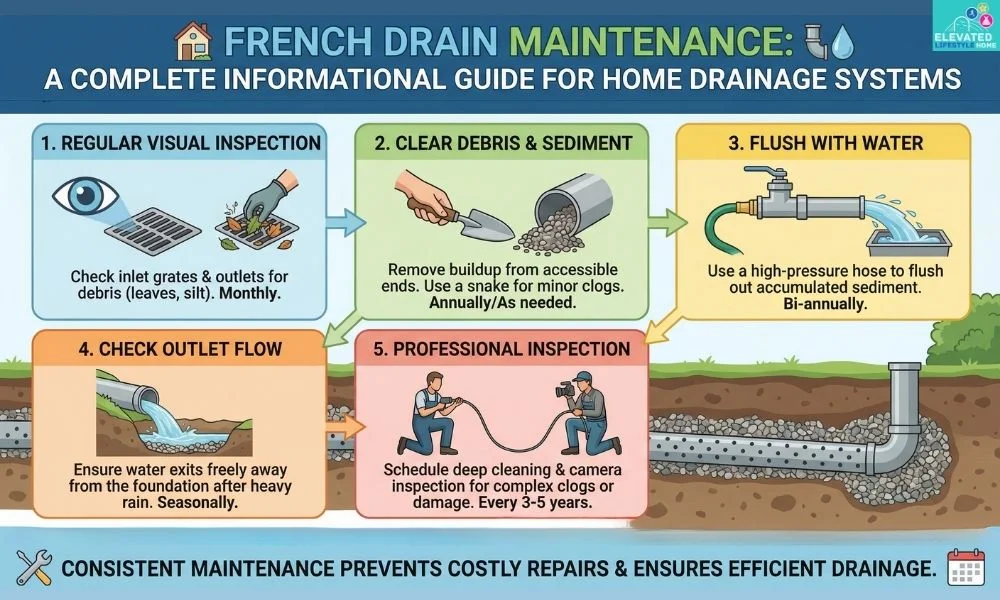
Basic care entails inspecting, cleaning, & monitoring outlets. Homeowners frequently use a “French drain inspection checklist” to monitor system health. Visual inspections help in the identification of surface concerns & enhance “perforated pipe maintenance” awareness.
Cleaning procedures emphasize safe flushing & debris management. Many guides explain “how to flush a French drain pipe” & provide “French drain cleaning tips”. Using the proper “French drain cleaning equipment” reduces internal accumulation without damaging pipes.
Example: A homeowner follows a checklist every spring, removing leaves and small stones. Pipes stay clear, and water flows efficiently.
“Keep your yard safe and dry! Follow our expert French drain tips to protect your drainage system and prevent water problems this season.”
Drainage System Maintenance for Different Environments
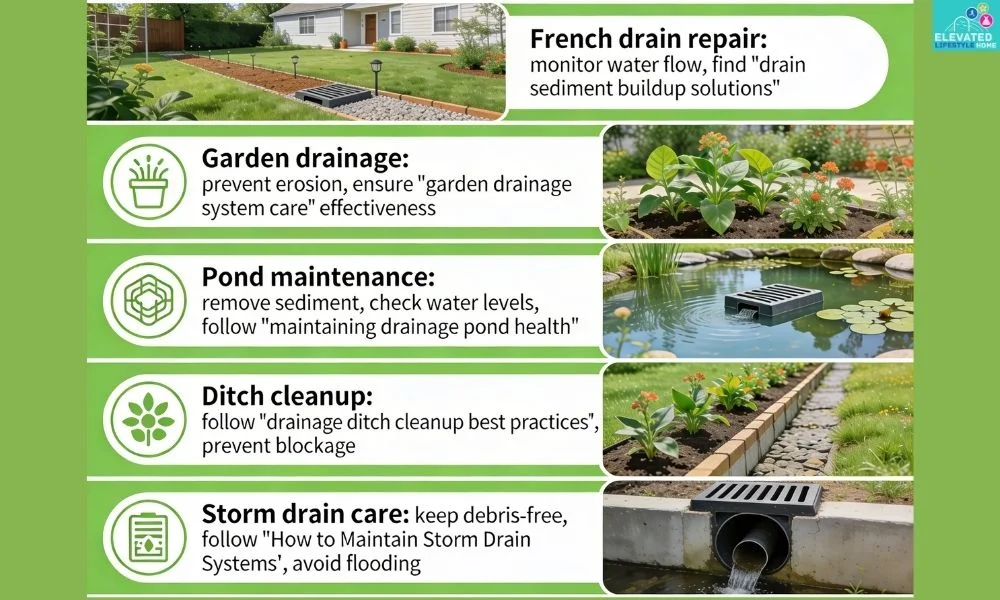
French drains behave differently depending on the environment, so let’s see how maintenance varies across different yard conditions. Drainage systems differ according to the environment.
French drain repair in the backyard entails monitoring water flow and looking for “drain sediment buildup solutions”. Garden spaces require frequent maintenance to prevent soil erosion, ensure that the “garden drainage system care” is effective, & keep plants healthy.
Outdoor ponds and drains require constant seasonal monitoring. Debris control and outlet monitoring are both necessary for proper care.
Maintaining these systems preserves the property, and following “drainage system longevity tips” ensures that water flows smoothly without causing flooding or damage over time.
Example: A homeowner in Colorado noticed that water pooled differently in shady and sunny areas. By adjusting French drain paths in each zone, water flowed evenly across the yard.
Drainage Pond Maintenance Overview
To keep ponds balanced, sediment must be removed and water levels checked on a regular basis. To avoid overflow and stagnant water, homeowners focus on “maintaining drainage pond health”.
Effective pond drainage avoids algae growth and promotes soil stability in the surrounding area, hence enhancing overall French drain function.
Drainage Ditch Maintenance Basics
Ditches require careful cleaning and management of plants. Following “drainage ditch cleanup best practices” reduces blockage and promotes smooth water flow.
Regular examination ensures that the ditch functions properly and prevents erosion near the property’s foundation or surrounding drainage systems.
Storm Drain Maintenance Explained
Storm drains must be debris-free for proper discharge. “How to Maintain Storm Drain Systems” ensures that heavy rain does not result in flooding.
Inspecting outlets, checking for buildup, and flushing pipes as needed helps to avoid standing water and maintain overall drainage system health.
Seasonal Drainage Maintenance Considerations

Maintenance needs change with seasons, so let’s explore key seasonal tasks to ensure your drainage system functions all year round.
Seasons affect how water drains through drainage systems. During rainy seasons, constant inspection is required to prevent water pooling.
Seasonal drainage system care includes clearing leaves, inspecting slopes, and ensuring French drains effectively carry water away from foundations. During the winter and fall months, frozen or debris-filled pipelines must be monitored.
Proper care decreases the likelihood of clogs, maintains garden areas, and ensures that “French drain outlet maintenance” operates as intended. Seasonal activities help drainage systems last longer and work better year after year.
Example: In Pennsylvania, a homeowner removed fallen leaves before winter. This prevented French drain clogs and ensured smooth drainage during snowmelt.
Tools and Equipment Commonly Used in Drainage Maintenance

To perform maintenance efficiently, it is essential to know the right tools and equipment that make the job easier and more effective. Basic equipment for drainage maintenance includes inspection cameras, shovels for digging, and pipe cleaning tools.
Knowing “what tools are needed for drain maintenance” allows homeowners to handle minor difficulties securely and without damaging pipes.
Tools ensure that inspections and cleaning activities are completed efficiently. To properly remove sediment and debris, utilize specialized “French drain cleaning equipment”.
These tools aid homeowners in maintaining efficient water flow and avoiding blockages that can cause dirt or structural damage, supporting their DIY French drain cleaning guide efforts.
How Often Should Drainage Systems Be Maintained
Understanding the correct frequency for inspections and cleaning helps prevent blockages and keeps your drainage system in top condition.
Maintenance frequency varies according to local climate, soil, and system type. Homeowners frequently inquire, “How often should I clean my French drain?”
Drains are typically checked twice a year and inspected for blockage or debris following heavy rainfall. Regular maintenance reinforces the “maintenance schedule for drainage systems” best practices.
Following deadlines enables effective “French drain clog prevention”, reduces sediment building, and prevents water pooling near foundations. Consistent maintenance improves drainage efficiency over time.
Example: A family in New Jersey inspects their French drain once every year. They remove debris and check pipes before and after the rainy season.
Common Drainage Maintenance Mistakes to Avoid
Finally, let’s learn from common mistakes that homeowners make so you can avoid them and maintain a smooth-flowing drainage system.
A common mistake is to ignore early warning signs of a problem. Homeowners should look for “signs my drainage is failing” and avoid short-term remedies that worsen problems. Neglecting slope adjustments may reduce drainage efficiency.
Another problem is incomplete cleaning. Over-flushing or using the incorrect equipment might damage pipes.
Follow safe “French drain cleaning tips” and monitor outlets to minimize root intrusion, maintain flow, and ensure the drainage system remains effective for many years.
Example: A homeowner in Michigan ignored leaves in the drain. After heavy rain, standing water appeared, which could have been prevented by timely cleaning.
Conclusion: Maintaining a Healthy Drainage System Over Time
Maintaining a healthy drainage system does not have to be complicated. Regular “French drain maintenance” procedures can help prevent water from accumulating around your home and save you money on repairs.
Paying attention to “drainage maintenance” and easy “storm drain maintenance” tasks will keep your yard healthy and your foundation protected.
Regular “drainage system maintenance” checks can also help detect problems early, such as blockages or sediment buildup, before they become more serious.
A few easy practices and regular maintenance can help homeowners prolong the life of their drainage systems and create a safer, drier, and more attractive landscape.
“Worried about clogged drains or flooding? Try these simple DIY drainage tips to keep your French drain working smoothly and protect your yard.”
Frequently Asked Questions (FAQs)
1. What is the best way to prevent French drain clogs?
The best strategy to avoid French drain blockages is to keep material out of the system and routinely inspect access points. Drain grates and surrounding surfaces are kept clear so that water can flow freely and sediment does not build up. Regular monitoring is recommended to detect early blockage buildup.
2. How often should a French drain be inspected?
A French drain inspection is advised at least once a year, with additional checks before and after major rain events. This method ensures that early indicators of sediment buildup or blockages are detected before they affect performance.
3. What signs indicate that a French drain might be failing?
A failing French drain will show signs such as prolonged standing water in the backyard, slow water flow after rain, and erosion around the drain outlet. Homeowners are generally the first to notice visible puddles or damp regions.
4. How does sediment buildup affect drainage?
Sediment buildup limits the amount of space available for water to enter the perforated pipe, resulting in slower drainage performance. Over time, this might cause clogged areas of the drain that need to be cleaned or flushed.
5. Can tree roots block my French drain?
Yes, tree roots can enter perforated pipes and become trapped inside aggregate layers, restricting water flow. Areas with tall trees are regularly monitored because tree root intrusion is a common problem.
6. How is a French drain’s condition checked?
Visually inspect the outlet and catch points of a French drain, as well as observe the yard water flow after rain. Slow drainage or standing water generally indicates that the system needs attention.
7. Is a maintenance schedule for drainage systems important?
Yes, a maintenance schedule for drainage systems is necessary to ensure that frequent checks and clearing happen on a predictable timetable. This helps prevent serious challenges and keeps the system running properly.
8. What is the difference between a French drain and a storm drain?
A French drain is often a gravel trench with a perforated pipe used to manage underground water, whereas storm drains are surface channel systems meant to transport rainwater runoff away from paved areas. Both serve the same objective of drainage, but in different situations.
9. How does proper slope impact French drain performance?
A proper slope is required so that gravity can flow water through the pipe. If the slope is too flat, the flow of water slows; if it is too steep, sediment may settle unevenly. The proper grading is maintained during setup and monitored during maintenance.
10. When should professional drain maintenance services be considered?
Professional drain maintenance services are recommended when blockages persist, system performance appears to be compromised, or specialized machinery is required for extensive cleaning. Professionals can employ techniques like hydro jetting or video inspection to thoroughly assess problems.

