
Dealing with persistent bugs or rodents invading your living space is stressful, especially when balancing effective extermination with the safety of your family.
As a responsible homeowner, it is completely natural to ask, “What chemicals do pest control use?” and evaluate whether professional treatments pose any risk to your indoor environment.
Understanding what chemical do pest control companies use most often gives you complete clarity and confidence before hiring a professional service.
Critical questions like “are pest control chemicals harmful to humans?” or “how long after pest control is it safe for pets?” deserve transparent, science-backed answers.
Additionally, exploring how professional formulations compare to mild natural pest repellents allows you to make informed, safe choices for your entire household.
What Chemicals Do Pest Control Use?
To properly evaluate residential safety, you must first understand the primary categories of compounds applied by licensed exterminators.
When homeowners inquire about what chemicals do pest control use, they are usually asking about active ingredients designed to safely eliminate or manage specific pest populations.
In the United States, professional pest control products must meet strict EPA regulations before they can be used in homes. Most professional pest control companies rely on three main types of products:
- Insecticides: Targeted formulas designed to eliminate crawling and flying insects like ants, roaches, bed bugs, and mosquitoes.
- Rodenticides: Specially formulated baits used exclusively to control mice and rats in enclosed, tamper-resistant bait stations.
- Fumigants: Heavy-duty gaseous compounds reserved for severe structural infestations, requiring complete home evacuation.
If you’re dealing with fleas indoors, our guide on cleaning a house after a flea infestation walks you through the cleanup process step by step.
Unlike off-the-shelf DIY sprays that rely on high liquid volume and quick evaporation, professional technicians utilize low-volatility synthetic pyrethroids, microencapsulated suspensions, and insect growth regulators (IGRs).
These advanced applications provide long-lasting pest elimination while keeping chemical exposure indoors to an absolute minimum.
Are Professional Pest Control Chemicals EPA Approved?
In the United States, professional pest control companies can only use products that are registered with the Environmental Protection Agency (EPA).
Before a pesticide is approved, it goes through extensive testing for effectiveness, environmental impact, and human safety when used according to the label.
This gives homeowners an added layer of confidence that licensed professionals are using products that meet strict federal standards.
What Chemical Do Pest Control Companies Use Most Often

Knowing what chemical do pest control companies use daily helps you understand why exterminators choose specific products over consumer-grade alternatives.
Certified technicians select chemicals based on the target pest species, the severity of the infestation, and the physical characteristics of the application zone.
The most frequently applied professional pest control chemicals include:
- Synthetic Pyrethroids (e.g., Permethrin, Bifenthrin, Cypermethrin): Man-made versions of natural chrysanthemum extracts. They target the nervous systems of insects on contact while remaining exceptionally low in toxicity to mammals once fully dry.
- Neonicotinoids (e.g., Imidacloprid, Acetamiprid): Highly effective systemic agents used primarily in ant and cockroach gel baits that target specific pest neural pathways.
- Insect Growth Regulators (IGRs like Pyriproxyfen): Specialized compounds that do not instantly kill adult insects but disrupt their juvenile molting and egg-hatching cycles, stopping colony reproduction permanently.
Professional exterminators apply these compounds in a controlled, strategic manner—injecting gel baits directly into deep wall crevices, perimeter baseboards, or sealed bait stations.
This precise application strategy ensures maximum pest control efficacy while preventing accidental contact with children or household pets.
Common Types of Pest Control Chemicals
Understanding the clear distinction between different pest control chemical categories helps homeowners appreciate why specialized treatments are required for specific infestations.
For instance, knowing the structural difference between an active insecticide and a rodenticide prevents improper chemical selection and unnecessary environmental risk.
| Chemical Category | Primary Target Pests | Application Method | Safety & Exposure Focus |
| Insecticides | Ants, Roaches, Mosquitoes, Spiders | Baseboard cracks, wall voids, perimeter barriers | Controlled indoor application; keep pets clear until dry. |
| Rodenticides | Mice and Rats | Tamper-resistant, locked bait stations | Enclosed containers prevent child or pet access. |
| Termiticides | Subterranean & Drywood Termites | Soil trenching, direct wood injection | Structural perimeter treatment; zero indoor contact. |
| Fumigants | Severe Termites, Wood Borers | Tented gaseous dispersion | Professional-only; mandatory home vacation for 24–72 hours. |
In addition to synthetic formulas, technicians frequently utilize boric acid pest control powders inside dry wall voids or non-synthetic mineral repellents like diatomaceous earth.
When applied correctly according to EPA product labels, these specialized mineral and chemical applications eliminate pests efficiently without lingering hazards to your family’s indoor air quality.
How These Pest Control Chemicals Actually Work

To understand how modern extermination methods protect your home, it helps to know how professional treatments target pest biology.
Rather than indiscriminately spraying heavy toxins, certified technicians use advanced formulations engineered to target specific biological systems within insects and rodents.
- Disrupting the Nervous System: Most professional insecticides—such as synthetic pyrethroids and neonicotinoids—work by overstimulating the central nervous system of target pests. This leads to rapid paralysis and death, quickly neutralizing active infestations.
- Interrupting Growth Cycles (IGRs): Insect Growth Regulators (IGRs like Pyriproxyfen and Methoprene) mimic natural juvenile hormones. They prevent young insects from molting, maturing, or producing viable eggs, effectively collapsing the entire colony over time without needing heavy toxic sprays.
- Targeting Metabolism and Energy Production: Products containing boric acid or hydramethylnon act as stomach poisons when ingested during grooming, destroying the pest’s digestive tract or disrupting its cellular energy production.
By combining low-volatility synthetic pesticides with eco-friendly biopesticides and targeted baits, professional pest control services achieve maximum long-term elimination while minimizing chemical exposure risks inside your home.
Are Pest Control Chemicals Harmful to Humans?
It is completely natural to worry about health risks when chemical sprays are applied inside your living space. When applied incorrectly by untrained individuals, pesticide exposure can lead to mild respiratory irritation, skin contact dermatitis, or headaches.
However, when applied by licensed professionals following strict EPA product labels, pest control chemicals are not harmful to humans. Modern residential pest management minimizes risk through strategic application methods:
- Low Volatility Formulations: Professional products dry rapidly and do not remain suspended in the air, preserving your indoor air quality.
- Targeted Placement: Chemical applications are injected deep into wall voids, cracks, baseboard crevices, or enclosed bait stations—areas completely out of reach of children and daily human contact.
- Strict Adherence to Label Guidelines: EPA-registered pesticides feature strict application rates designed specifically to keep human health exposure well below recognized toxicological thresholds.
Health Symptoms Linked to Pest Control Chemical Exposure
While serious adverse reactions from professional treatments are extremely rare, recognizing early signs of accidental exposure ensures your family remains completely safe.
Minor symptoms typically occur only if someone enters a freshly sprayed area before the liquid application has fully dried or if sensitive individuals inhale wet spray vapors.
Common Mild Exposure Symptoms:
- Respiratory: Mild coughing, nasal congestion, or throat irritation from inhaling fresh spray mist.
- Dermatological: Temporary redness, mild itching, or skin tingling upon direct physical contact with wet chemicals.
- Systemic: Mild headaches, light nausea, or eye watering.
Safety Protocol: If you suspect accidental chemical contact, immediately wash the affected skin area with mild soap and warm water, move to fresh outdoor air, and ventilate the room. If symptoms persist, consult a healthcare professional or contact the National Poison Control Center (1-800-222-1222).
How Long After Pest Control Is It Safe for Pets?

Pet owners frequently ask, “how long after pest control is it safe for pets?” to ensure their dogs, cats, or small animals are never exposed to active chemical hazards.
For additional pet safety tips before and after treatment, read our complete guide to pest control that is safe for pets.
As a general rule, it is safe for pets to return to treated areas 2 to 4 hours after application, or as soon as all sprayed liquid surfaces have completely dried.
Pets—especially cats and dogs—are more vulnerable to chemical exposure because they explore close to baseboards, lick their paws during grooming, and have a higher metabolic sensitivity to certain active ingredients.
PET SAFETY RE-ENTRY TIMELINE

1. Wet Application Phase (0 - 2 Hours): STRICT VACATION (Keep pets in untreated rooms or outdoors)

2. Drying Phase (2 - 4 Hours): SAFE RETURN (Surfaces fully dry; liquid risk eliminated)

3. Granular / Bait Station Phase (Immediate): SAFE (When enclosed in tamper-resistant stations)
Essential Pet Safety Rules Following Pest Control:
- Wait for Total Surface Drying: Never allow pets to walk on treated floors, carpets, or baseboards while the liquid chemical is still wet.
- Special Feline Caution: Cats lack specific liver enzymes required to break down concentrated pyrethroids (like high-dose Permethrin). Ensure your exterminator uses feline-safe, low-concentration formulations.
- Cover Fish Aquariums and Bird Cages: Birds have sensitive respiratory systems, and fish are vulnerable to airborne pyrethroid mists. Always cover tanks and cages with a towel and turn off air pumps during indoor spraying.
Safety Precautions Followed by Professional Pest Control Companies
Licensed exterminators do not simply arrive and spray indiscriminately; they operate under strict federal regulations designed to eliminate chemical pest control risks.
Professional pest management relies heavily on Integrated Pest Management (IPM)—a strategy that prioritizes prevention, structural sealing, and targeted baiting before resorting to broad chemical applications.
When chemical treatments are necessary, certified technicians protect your household through rigorous safety protocols:
- Personal Protective Equipment (PPE): Technicians wear specialized respirators, heavy nitrile gloves, and eye protection during mixing and application to prevent overspray or accidental spills.
- Precise Chemical Dosage: Professionals use calibrated equipment to apply exact chemical concentrations mandated by EPA product labels, preventing over-saturation inside your home.
- Tamper-Resistant Equipment: Rodenticides and toxic ant baits are housed exclusively inside locked, heavy-duty bait stations to prevent accidental opening by young children or domestic pets.
What Homeowners Should Do Before and After Pest Control

Active participation from homeowners ensures that chemical treatments are both highly effective and completely safe for everyone under your roof. Proper preparation prevents unnecessary household pesticide exposure and preserves your indoor air quality.
Action Checklist for Homeowners:
Before the Exterminator Arrives:
- Clear Floor Access: Move furniture, toys, pet bowls, and food containers away from baseboards and wall perimeters where technicians need to apply treatments.
- Store Food Items Securely: Seal all open food containers, fruits, and bread boxes inside kitchen cabinets or the refrigerator. You can also follow these practical kitchen safety tips to keep food preparation areas protected before and after pest control.
- Protect Pets and Aquariums: Cover fish tanks with plastic wrap and turn off air pumps. Plan to remove dogs, cats, and birds from the home during active liquid spraying.
After Treatment is Complete:
- Observe Strict Re-Entry Hours: Do not enter treated rooms until the full recommended re-entry window (typically 2 to 4 hours) has passed and all liquid sprays are completely dry.
- Ventilate the Living Space: Upon returning, open windows and doors for 15 to 30 minutes to circulate fresh outdoor air and clear lingering liquid application odors.
- Wipe Down Food Preparation Surfaces: Clean kitchen countertops and dining tables with warm soapy water before preparing meals, while leaving perimeter baseboards unwashed so residual pest barriers remain active.
If you work remotely, it’s also worth reviewing these work-from-home safety tips while preparing your home for pest treatment.
Natural Pest Repellents vs. Professional Chemical Pest Control
When dealing with a bug problem, many homeowners compare gentle natural pest repellents against heavy-duty professional chemicals.
Choosing the right approach depends entirely on the specific pest species, the size of the infestation, and your household’s safety priorities.
| Feature / Metric | Natural Pest Repellents | Professional Chemical Pest Control |
| Common Ingredients | Essential oils (Peppermint, Cedarwood), Diatomaceous Earth, Neem Oil | Synthetic Pyrethroids, Neonicotinoids, IGRs, Hydramethylnon |
| Primary Mechanism | Mask scent trails; create mild physical barriers or short-term repellency | Disrupt nervous system, collapse metabolic functions, disrupt growth cycles |
| Best Used For | Prevention, mild ant/spider trails, households with newborns | Severe, active, or structural infestations (Termites, Bed Bugs, Cockroaches) |
| Residual Longevity | Short-lived (Requires daily or weekly reapplication) | Long-lasting (Remains active for weeks or months in wall voids) |
| Indoor Safety Risk | Exceptionally low (Non-toxic to humans and pets when diluted) | Very low when dry, but requires strict re-entry protocol during application |
When Are Non-Chemical Methods the Better Choice?
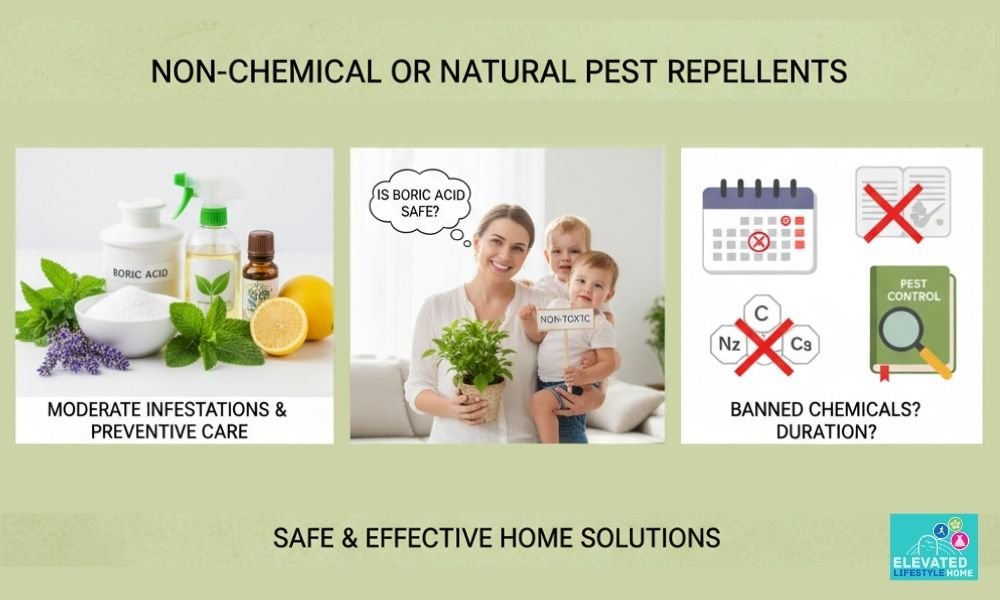
Non-chemical solutions are ideal for preventive care or minor insect activity. Using botanical repellents around window sills or dusting food-grade diatomaceous earth inside dry baseboards effectively deters mild ant trails without introducing synthetic chemicals.
However, for destructive pests like termites or rapid-breeding insects like German cockroaches and bed bugs, natural repellents are insufficient.
If you prefer to avoid synthetic treatments whenever possible, explore these non-chemical pest control methods for preventive pest management around your home.
In these cases, professional chemical treatments are necessary to achieve complete elimination and protect your home’s structural integrity.
Final Thoughts on Pest Control Chemicals
Dealing with pests at home can feel overwhelming, but it doesn’t mean you have to compromise your family’s safety.
By understanding what chemicals do pest control use and how modern exterminators apply them, you can approach professional pest management with total confidence.
Following simple safety protocols—such as observing proper re-entry times for pets, ventilating your home after treatment, and keeping food surfaces covered—ensures that pest management remains effective, safe, and stress-free for your entire family.
Still unsure whether professional pest control is the right choice? Compare safe chemical treatments with natural alternatives before scheduling your next service so you can choose the best option for your home and pets.
Frequently Asked Questions (FAQs)
Q1: What chemicals are used most often by pest control companies?
Pest control companies primarily use synthetic pyrethroids (like Bifenthrin and Permethrin), neonicotinoid gel baits, insect growth regulators (IGRs), and targeted rodenticides registered and regulated by the EPA.
Q2: Are pest control chemicals harmful to humans?
No, not when applied by a licensed professional according to EPA product labels. Risk is minimized by applying products in wall voids and cracks, and by ensuring liquid sprays are completely dry before humans re-enter.
Q3: How long after pest control is it safe for pets to return?
It is safe for pets to return 2 to 4 hours after treatment, or as soon as all sprayed liquid surfaces have completely dried. Keep pets out of the area while chemicals remain wet.
Q4: What are the symptoms of accidental pesticide exposure in humans?
Mild exposure may cause temporary skin redness, mild coughing, eye watering, or mild headaches. If chemical contact occurs, wash affected skin with soap and water immediately and move to fresh air.
Q5: Can pest control chemicals affect indoor air quality?
Liquid sprays can temporarily affect indoor air quality while wet. Opening windows and doors for 15 to 30 minutes after the re-entry period clears lingering mists and restores fresh indoor air flow.
Q6: How long do professional pest control chemicals last after application?
Most indoor perimeter treatments remain effective for 30 to 90 days, while specialized termiticides injected into soil or wall voids can last for several years.
Q7: Are natural or eco-friendly pest repellents as effective as chemicals?
Natural repellents work well for mild pest deterrence and preventive care. However, severe, active, or structural infestations (such as termites or bed bugs) require professional synthetic chemicals for complete elimination.
Q8: Do pest control companies have to disclose what chemicals they use?
Yes. Professional pest management companies are legally required to provide active ingredient details and Safety Data Sheets (SDS) for any chemical applied inside or around your home upon request.
Q9: Is it safe to stay inside your home during routine pest control treatment?
Yes, for routine indoor perimeter treatments or gel bait applications. However, residents and pets should stay in untreated rooms or outdoors until liquid sprays are completely dry.
Q10: Are pest control chemicals toxic to household cats?
Cats are particularly sensitive to concentrated pyrethroids because they lack specific liver enzymes needed to process them. Always inform your exterminator if you own cats so they can use feline-safe, low-concentration formulations.
Q11: Can I clean my floors after pest control?
It’s best to avoid mopping treated baseboards or floors for at least 24 hours unless your pest control technician recommends otherwise. This allows the treatment to continue working effectively while reducing the chance of removing the protective barrier.

