
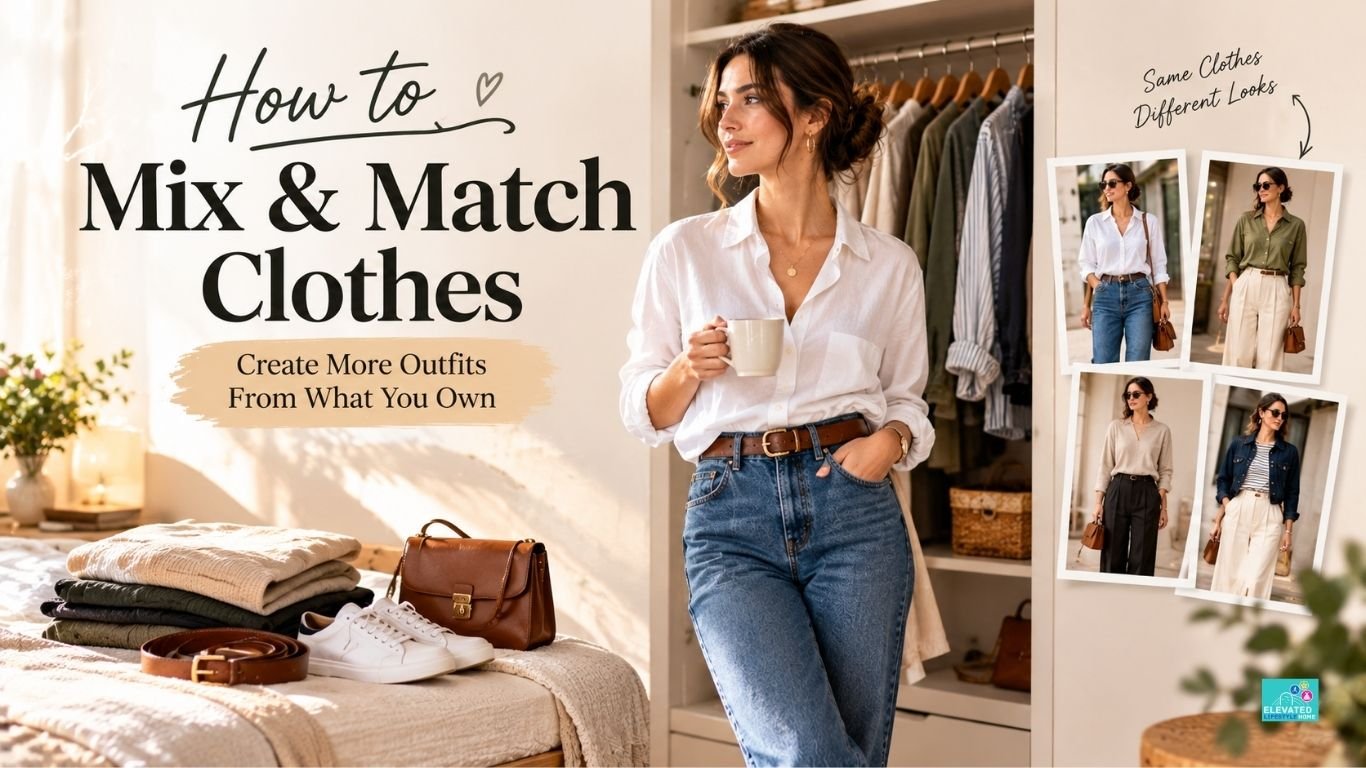
Standing in front of a wardrobe full of clothes and still feeling like you have nothing to wear is frustrating. You pull out a crisp button-down, hold it against dark trousers, and put both back. Nothing seems to work together.
The clothes are in good condition, but getting dressed still feels like a daily chore. For busy people who want to look put-together without spending extra time getting dressed, learning how to mix and match clothes can make everyday styling much easier.
The key is to choose versatile pieces, build a cohesive color palette, and learn a few simple outfit formulas you can repeat.
The Morning Dilemma: Why Getting Dressed Feels Harder Than It Should
Getting dressed should feel straightforward, but casual everyday coordination often feels harder than wearing a uniform. Structured dresses and tailored suits make choices easy because the full silhouette is already assembled.
Casual separates, by contrast, demand that you balance comfort, color, and proportion completely from scratch every single morning.
When your wardrobe is filled with separate items that do not share a common foundation, decision fatigue sets in fast.
Research on enclothed cognition suggests that what we wear can influence how we think, feel, and behave, although the strength of these effects varies across studies.
That makes clothing more than a visual choice: the meaning we attach to an outfit and the physical experience of wearing it can both shape how we experience getting dressed.
Quick Takeaway
Outfit indecision rarely comes from a lack of clothes. It happens when separate pieces lack a shared foundation of neutral tones, complementary textures, and balanced proportions.
The Real Problem: Why a Packed Closet Still Leaves You with Nothing to Wear
A packed closet often gives the illusion of endless variety while actually offering fewer workable options. Buying clothes as individual impulses rather than building an integrated collection leaves you with a rack full of disconnected garments.
The Trap of Buying Standalone Pieces Without Matching Separates
Most wardrobe clutter comes from purchasing statement tops, bright patterns, or unique cuts that catch your eye in the store. When you bring them home, you realize they do not pair with any of your dependable pants or skirts.
An item without at least three natural partners in your closet remains an orphan piece that takes up space and complicates morning choices.
How Visual Clutter in Your Wardrobe Causes Morning Fatigue
When your hangers are jammed tight with unworn pieces, your eyes cannot quickly identify core essentials. Overcrowded rails hide versatile basics beneath impulsive purchases.
Organizing your wardrobe so every garment is visible and accessible eliminates visual noise, making simple outfit combinations obvious at first glance.
How to Create More Outfits from Less with a Cohesive Color Palette

A harmonious color system is the foundation of a versatile wardrobe. Learning how to create more outfits from less begins with choosing a dependable palette where every top and bottom naturally coordinates without much thought.
The Neutral Anchor Rule
Base Neutrals (Ivory, Charcoal, Espresso) + 1 Subtle Accent (Olive, Soft Blue) = Zero-Friction Coordination
Anchoring Your Daily Foundation with Versatile Base Neutrals
Base neutrals—such as chalk white, charcoal, oat, navy, and deep espresso—are easy to combine with other colors and pair naturally with each other.
Investing in foundational bottoms and outer layers within this neutral range ensures that any top you grab works seamlessly with your pants or skirts.
Curating an intentional wardrobe works best when your daily routine carries the same simplicity; explore our complete guide on setting up a calm morning routine to start your day with purpose.
Want more ways to make everyday outfits look polished? Explore our guide on how to style casual outfits to look put together for simple styling ideas that work with the clothes you already own.
Introducing Intentional Accent Shades Without Causing Mismatches
Adding color does not require wild prints or unpredictable neon tones. Introduce muted, earthy accent colors—such as soft sage, dusty blue, terracotta, or warm butter—that sit comfortably alongside your chosen neutrals.
This disciplined approach lets you add visual warmth to simple basics without disrupting your wardrobe’s overall versatility.
Everyday Mix and Match Outfit Ideas for Effortless Mornings

Having dependable outfit combinations on standby removes the stress of early-morning dressing. These practical everyday mix and match outfit ideas use core essentials to create clean, reliable silhouettes that look deliberate in any setting.
For more ways to make simple wardrobe staples look polished, see our guide on how to make basic outfits look expensive.
Pairing Classic Button-Down Shirts with Straight-Leg Denim
An oversized organic cotton poplin button-down in crisp white or soft blue pairs effortlessly with medium-wash, straight-leg denim.
Roll the cuffs past your forearms to reveal your wrists, and use a soft French tuck at the waistband to define your natural frame. Ground the look with sleek pointed-toe leather flats or clean white sneakers for an understated, balanced everyday look.
Styling Tailored Trousers with Structured Crewneck Tees
Tailored, high-waisted wide-leg trousers in beige or charcoal provide a structured base for casual tops.
Pairing them with a structured white crewneck tee softens the formality while keeping the outfit polished. Fasten the waistband with a classic leather belt to pull the combination together in seconds.
How to Mix and Match Clothes Using the 3:1 Capsule Formula
Tripling the number of outfits you can wear does not require buying a brand-new wardrobe.
The simplest way to master how to mix and match clothes is using the 3:1 Capsule Formula: for every bottom you own, ensure you have at least three distinct tops that pair with it naturally.
The 3:1 Capsule Ratio
1 Core Bottom + 3 Compatible Tops or Layers = 3 Easy Outfit Starting Points

(Creates three easy outfit starting points that can be adapted for work, weekends, or evenings.)
Choosing Four Core Bottoms That Offer Maximum Versatility
Start by selecting four dependable bottoms that flatter your frame and work across different settings.
A versatile foundation includes high-waisted tailored trousers in charcoal or taupe, rigid straight-leg denim in medium blue, a fluid slip skirt in espresso or black, and crisp linen-blend pants for warmer days. These four pieces create a steady foundation that supports dozens of combinations.
Multiplying Daily Outfits with Flexible Layering Tops
Once your core bottoms are set, assign three separate tops to each one. A pair of tailored trousers easily pairs with a fitted ribbed tank for casual days, a crisp poplin button-down for professional meetings, and an open cardigan draped over your shoulders for evenings.
This simple ratio creates reliable mix and match outfit formulas that remove morning friction completely.
The Wardrobe Matrix: How to Mix and Match Clothes
Assembling cohesive outfits every morning should never rely on random guesswork. The Wardrobe Matrix is a simple three-phase styling framework designed to help you understand how to mix and match clothes using balanced proportions, clean lines, and easy finishing touches.
The Wardrobe Matrix
Phase 1: The Fabric Base ➔ Phase 2: The Volume Rule ➔ Phase 3: The Anchor Point
(A repeatable 3-step formula to assemble balanced, elevated outfits in under two minutes.)
Phase 1: The Fabric Base (Balancing Weaves and Textures)
Every cohesive outfit starts with tactile balance. When every item shares the same flat fabric, the outfit looks lifeless.
Pair contrasting textures together: wear a fine-gauge ribbed knit with crisp woven cotton poplin, or combine smooth fluid silk with structured denim. Contrasting fabric weights create visual depth without relying on busy patterns.
Phase 2: The Volume Rule (Contrasting Fitted and Relaxed Shapes)
Proportion defines whether an outfit looks intentional or messy. Apply the simple rule of opposites: if your trousers are wide-leg and fluid, keep your top fitted with a neat ribbed tank or a tucked tee.
If you choose an oversized cotton button-down, keep your lower half streamlined with straight-leg denim. This volume contrast ensures your silhouette stays balanced.
Phase 3: The Anchor Point (Belts, Bags, and Clean Footwear)
Finish the outfit with clean, intentional accessories. Fasten your waistband with a classic leather belt featuring brushed brass or silver hardware, step into pointed-toe leather flats or clean white sneakers, and carry a structured leather tote that holds its shape.
These finishing pieces tie your separates together into a unified look. For more ideas on making everyday casual combinations look polished, see our guide on how to style casual outfits to look put together.
How to Layer Clothes to Create New Looks Across Different Seasons

Layering allows you to wear your favorite warm-weather pieces well into autumn and winter. Learning how to layer clothes to create new looks starts with thin, breathable layers that add warmth and visual interest without creating uncomfortable bulk.
Quick Takeaway
Effective layering relies on varying fabric weights, not thickness. Thin, breathable layers create clean dimensions while keeping movement effortless.
Using Unbuttoned Shirts as Lightweight Outer Layers
An oversized cotton or linen button-down works wonderfully as a lightweight jacket during transitional weather.
Wear it completely unbuttoned over a fitted white tank top tucked into straight-leg jeans. Rolling the sleeves loosely to your elbows creates an airy, relaxed silhouette that feels functional and modern.
Draping Fine-Knit Cardigans to Add Visual Texture
Instead of wearing a sweater normally, drape a fine-gauge merino or cotton cardigan over your shoulders and loosely tie the sleeves across your chest.
This easy styling trick adds warmth across your back and introduces rich texture over a simple T-shirt or tailored dress without adding weight around your waistline.
How to Expand Your Wardrobe Without Buying Clothes

Learning how to expand your wardrobe without buying clothes often comes down to quick styling adjustments made in front of the mirror.
Unbuttoning the collar of a stiff shirt softens its formal appearance, while pushing long sleeves up to your elbows creates an airy, relaxed silhouette that exposes your forearms and jewelry.
Using a gentle French tuck at the center of your waistband establishes clear vertical proportions without tightening fabric around your hips.
Swapping casual canvas sneakers for pointed leather flats or adding a clean leather belt instantly shifts the visual tone of familiar denim.
These zero-cost adjustments breathe fresh life into items you already own, proving that variety is about styling intention rather than constant shopping.
Common Wardrobe Mistakes That Ruin Outfit Versatility
Even high-quality garments can fail to work together when subtle styling disconnects go unnoticed.
When you rely on simple separates, there are no busy designs or heavy layers to distract the eye. Steering clear of these frequent oversights keeps your daily wardrobe versatile, functional, and cohesive.
Relying on Complicated Prints That Resist Easy Pairing
Loud, highly specific patterns may catch your eye on the rack, but they rarely coordinate with other items in your closet. Wearing garments covered in busy florals or high-contrast graphics makes repeat styling obvious and limits your bottom options.
Prioritize subtle textures—such as ribbed knits, washed linen weaves, and fine wool twills—which deliver visual interest without fighting other wardrobe pieces.
Overlooking Fabric Weight and Texture Compatibility
Combining incompatible fabric densities disrupts the natural drape of an ensemble. Pairing a delicate, ultra-lightweight silk top with heavy, stiff utility pants creates an awkward imbalance that feels accidental.
Aim for intentional harmony: pair structured denim with crisp poplin, or soften tailored wool trousers with fine-gauge knitwear to ensure fabrics move together naturally.
The 4 Core Basics That Connect Your Entire Wardrobe
Creating endless combinations does not require an overstuffed closet. A tight rotation of hardworking foundational staples provides maximum outfit return with less morning guesswork.
Want more ideas for making simple pieces look polished? Explore our guide on how to dress chic in simple clothes for easy ways to create an elevated look from everyday wardrobe staples.
The Crisp Poplin Shirt and High-Density Crewneck Tee
An oversized white cotton poplin button-down functions seamlessly as a standalone top, a polished layer over dresses, or an open jacket over casual tanks.
Pair it alongside opaque, heavyweight white organic cotton crewneck tees that hold a clean shape around the neckline. These two foundational tops form the building blocks of dozens of dependable looks.
The Tailored Wide-Leg Trouser and Straight-Leg Denim
High-waisted, fluid pleated trousers in charcoal, taupe, or deep olive provide a structured base for casual knits and structured shirts alike.
Complement them with structured straight-leg denim in a classic medium wash. These two versatile bottoms transition effortlessly from casual weekend mornings to focused work environments.
Conclusion: Real Style Comes from Simple Habits and Clear Choices
Mastering how to mix and match clothes is not about chasing new seasonal trends or packing your wardrobe with endless options.
It is a calm, repeatable practice of choosing versatile neutrals, balancing proportions, and caring for quality fabrics that feel comfortable on your body. When your closet works as an integrated system, morning hesitation disappears.
True personal style lives in the understated confidence of keeping your routine simple, functional, and intentional.
Wear your clothes with purpose—and step into every room with grounded presence and ease.
Frequently asked questions on mixing and matching your wardrobe
How can I mix and match clothes without looking repetitive
Focus on changing the silhouette and layering rather than buying new prints. Styling a pair of tailored trousers with a fitted white tee and sneakers creates a clean casual daytime look, while pairing those same trousers with an open poplin shirt and pointed leather flats immediately gives it an elevated feel.
How can I create more outfits from fewer pieces in a small closet?
A simple starting point is the 3:1 ratio: aim for each core pair of pants or skirt to work naturally with at least three tops or layering options. Sticking to a cohesive base of neutral tones—like charcoal, cream, oat, and espresso—ensures all your separates coordinate effortlessly without clashing.
What are the best everyday mix and match outfit ideas for work and weekends?
A dependable combination is pairing an oversized cotton poplin button-down with straight-leg denim and low-profile leather sneakers for casual days. To transition into work settings, swap the jeans for high-waisted pleated wide-leg trousers and step into sleek leather loafers or flats.
How can I layer clothes to create new looks without adding bulk?
Layer using varying fabric weights rather than thick materials. Wear a lightweight silk-cotton tank, drape an unbuttoned poplin shirt over top, or tie a fine-gauge knit cardigan loosely over your shoulders to create tactile depth without restricting your movement.
How can I expand my wardrobe without buying more clothes?
Make quick styling micro-adjustments in front of the mirror with items you already own. Roll your shirt sleeves past your elbows, use a gentle French tuck at your waistband to show your belt, and unbutton top buttons to elongate your neckline.
What are the most versatile mix and match outfit formulas?
The most dependable formula pairs opposite volumes: combine a relaxed, oversized top with streamlined straight-leg denim, or pair wide-leg fluid trousers with a fitted ribbed top. This balance prevents your frame from looking overwhelmed by fabric.
How do I build a color palette that makes mixing clothes easy?
Choose two primary neutral shades (such as black and ivory, or navy and beige) for your foundational pants and coats. Add one or two soft, earthy accent colors—like olive green, dusty blue, or warm camel—that naturally harmonize with both base neutrals.
Why do my outfits never match even though I have a full closet?
Clothes fail to coordinate when they are purchased as standalone impulse buys rather than versatile separates. When items feature busy competing prints, unusual cuts, or clashing undertones, they resist effortless pairing with the rest of your wardrobe.
Which basic piece in your closet is your go-to foundation for creating different looks? Drop a comment below and share your favorite outfit combinations with us.
