
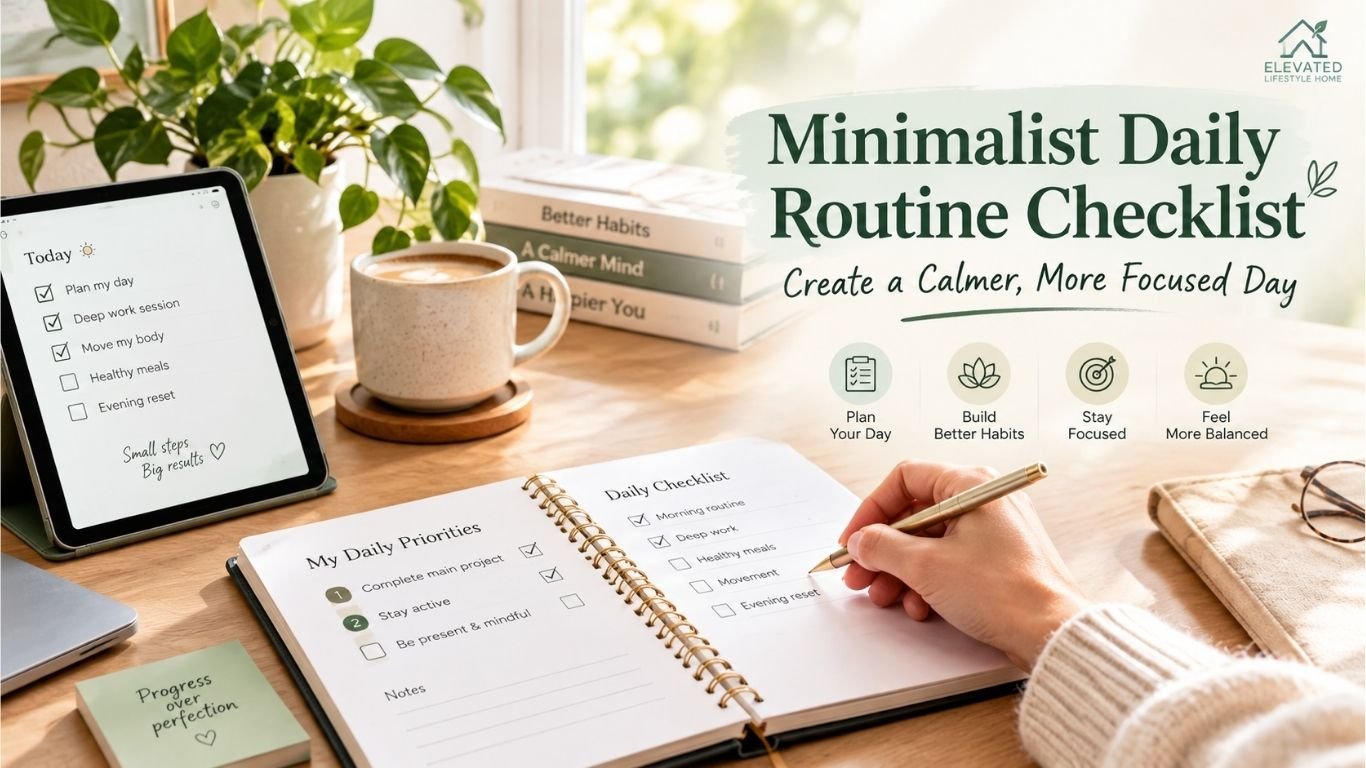
Productivity is not about doing more. It is about focusing on the tasks that matter most. For many people working from home, the problem is not a lack of motivation. It is having a routine that feels difficult to follow.
We often fall into the trap of over-complicating our systems, leading to planning fatigue and a fractured focus. A simple routine can give your day more structure and make it easier to stay focused.
A minimalist daily routine checklist is more than just a list of tasks. It helps reduce unnecessary decisions and keeps your daily actions connected to your priorities.
By removing unnecessary tasks, you can create a calmer environment that makes it easier to focus. This guide is not about following strict rules. It is about creating a simple daily reset that feels easy to maintain.
Quick Takeaway: A simple plan is easier to follow. Focus on a few important tasks instead of trying to manage everything at once.
Why Your Minimalist Daily Routine Checklist Fails: The Psychology of Planning
It can be difficult to stick to a plan when a schedule becomes more like a wish list than a realistic commitment. When we over-schedule every minute, we leave no room for the natural ebb and flow of life.
This can make the day feel overwhelming. Once we fall behind, it can become tempting to give up on the entire plan instead of simply adjusting it.
If your task list already feels overwhelming, our guide on how to focus when overwhelmed offers practical ways to regain focus.
A minimalist approach shifts the focus from quantity to quality. Instead of creating a twenty-item to-do list, focus on the few tasks that will make the biggest difference to your day.
A simpler planning approach can reduce unnecessary pressure and help you give more attention to your most important tasks.
- The Over-Optimization Trap: Trying to use too many tools at once.
- The “All or Nothing” Mentality: Quitting the day because one morning task was missed.
- Lack of White Space: Forgetting that rest is a productive requirement, not a reward.
The Core Pillars of Intentional Living: Daily Habits

To build a routine that lasts, focus on habits that support your lifestyle rather than make your day feel more restricted. A simple morning and evening routine can give your day more structure.
1. Build Intentional Daily Habits
Consistency is born from habits that feel good to perform. Instead of forcing a demanding morning routine, focus on creating a simple Slow Morning routine.
This might include ten minutes of mindful breathing, a quiet cup of coffee without a screen, and a quick review of your primary objective. When these habits are small and rewarding, they become the highlights of your day rather than chores on a list.
2. Prioritizing Deep Work Over Busy Work
Efficiency is often confused with being busy. Focused work can be more productive than constantly switching between multiple tasks. Your checklist can prioritize one main task for the day.
By keeping minor administrative tasks out of your peak focus hours, you can give more attention to complex work.
Step-by-Step: Building Your High-Performance Daily Plan
Building a useful daily plan starts with understanding how you actually spend your time. Instead of writing down everything you need to do, organize your day around your most important priorities.
This involves a daily reset ritual every evening to prepare for the following morning, helping you start the next morning with a clearer sense of what needs your attention.
- Audit Your Current Time: Spend one day tracking where your minutes actually go.
- Define Your Non-Negotiables: Identify three tasks that need to be completed for the day to feel successful.
- Map to Your Energy: Place high-focus tasks in your peak energy windows and administrative tasks during your “slump” periods.
- The Evening Review: Spend five minutes every night clearing your digital and physical workspace to invite a fresh start.
Quick Takeaway: A more organized day can start with a simple evening reset. Use the evening to remove tomorrow’s obstacles.
Ready to simplify your daily planning? Download our free One-Page Executive Reset Checklist to organize your priorities and prepare for the next day.
Simple Daily Workflow Tips for Better Focus

Efficient daily workflow tips aren’t about working faster; they are about creating a smoother transition from one task to another without losing focus.
For people managing work, messages, and digital tasks throughout the day, a simple workflow can make it easier to stay organized and focused.
By implementing a few structural changes, you can transform a chaotic day into a series of focused victories. Treating your energy as a limited resource can help you decide which tasks deserve your strongest focus.
The Art of Time Blocking
Instead of keeping tasks on a vague list, assign specific time blocks to your most important work. You can also use our time-blocking template to organize your day.
For example, if you are a creative professional, you might block 9:00 AM to 11:30 AM exclusively for deep work, leaving administrative emails for the post-lunch dip.
This can help keep routine administrative tasks from taking over the time you have set aside for focused work.
Batching Tasks for Mental Clarity
Switching between different types of tasks—like moving from a Zoom call to writing a technical report—can increase mental effort and make it harder to maintain focus. Try batching similar activities together.
You can dedicate specific hours to communication tasks, such as answering emails and messages, instead of checking them throughout the day.
Quick Takeaway: The right tools can help, but clear boundaries are just as important. Protect your focus time by limiting unnecessary interruptions.
Digital vs. Analog: Choosing Your Productivity Sanctuary

The format you choose for your minimalist daily routine checklist should match the way you prefer to plan and organize your day.
Some people prefer the feel of writing with a physical pen, while others prefer the convenience of a digital system that works across devices. There is no single right choice. The best format is the one that makes planning easier for you to maintain.
Optimizing Your Digital Daily Checklist for iPad
For the tech-forward professional, an iPad offers a unique blend of handwriting and digital organization.
Using a high-end planning app allows you to drag and drop tasks, set recurring reminders for intentional living habits, and keep your tasks, notes, and reminders in one place. If you prefer a digital system, our guide on creating a digital to-do list can help you organize tasks and reminders in one place.
I love using a digital setup when I’m traveling because it keeps my physical environment completely clutter-free while maintaining a robust digital daily checklist for iPad.
The Tactile Power of Luxury Stationery for Productivity
Some people find that using high-quality paper and a comfortable pen makes planning feel more enjoyable and deliberate. If you prefer writing by hand, luxury stationery can add a pleasant tactile element to your daily planning routine.
Physically checking off a completed task can make the process feel more satisfying for people who enjoy writing by hand. It grounds you in the present moment.
The 10-3-2-1-0 Method for a Simpler Evening Routine
A consistent evening routine can also make your daily schedule easier to maintain. One popular framework is the 10-3-2-1-0 rule.
The 10-3-2-1-0 rule is a popular sleep-hygiene framework built around simple habits before bedtime. Learn more about the 10-3-2-1-0 rule
- 10 Hours before bed: No more caffeine.
- 3 Hours before bed: No more food or alcohol.
- 2 Hours before bed: No more work.
- 1 Hour before bed: Reduce or stop screen use to give yourself a quieter wind-down period.
- 0 Times: The number of times you hit the snooze button in the morning.
The “Resistance” Phase: Common Mistakes That Break Consistency
Even the best-designed plans face the “resistance”—that internal voice that suggests “I’ll start tomorrow.” Understanding these pitfalls is the first step toward overcoming them.
Over-Scheduling the ‘Empty’ Spaces
A common error is filling every white space on your calendar. Life is unpredictable. If you don’t leave buffer zones between tasks, one late meeting or unexpected phone call can derail your entire daily workflow.
Leaving around 15 minutes between major blocks can give you time to reset and handle unexpected interruptions.
Neglecting the Evening Reset Ritual
Walking into a messy office in the morning can make it harder to start the day with a clear focus. Your intentional daily habits can include a five-minute “reset” where you clear your tabs, put away your stationery, and set out your primary objective for the next day. You are essentially giving a gift to your “future self.”
Elevated Tools for Your Daily Ritual
Whether you prefer premium journals and luxury stationery or the convenience of productivity apps and digital planners, your tools should make planning and working easier for you.
Choose tools that make planning easier and more enjoyable for you. A simple notebook, digital planner, or notetaking app can all work well when they help you organize your priorities without adding unnecessary complexity.
Conclusion: The Quiet Power of Consistency
Sticking to a minimalist daily routine checklist isn’t about achieving perfection; it’s about returning to your center every single day. When your daily tasks match your priorities, productivity can feel simpler and more manageable.
A good routine should give you structure without making your day feel rigid. Keep your checklist simple, focus on what matters, and leave enough space to adjust when life changes.
FAQs on How to Refine Your Intentional Living Daily Habits
How do I stick to a minimalist daily routine checklist?
A simple approach is to start with three non-negotiable tasks per day and adjust the number based on your schedule. By using a minimalist framework, you avoid the overwhelm of a cluttered schedule and build sustainable momentum.
What are the best intentional living daily habits for beginners?
Start with a “Slow Morning” ritual that includes screen-free time and a five-minute daily review. These small, intentional actions ground your focus before the digital noise of the day begins.
How can I improve my daily workflow?
Start by choosing your most important tasks, grouping similar activities together, and using time blocks for focused work. Leave some open time between tasks so unexpected interruptions do not disrupt your entire schedule.
Is a digital daily checklist for iPad better than paper?
It depends on your personal “friction point”; digital tools offer mobility and automation, while paper provides tactile satisfaction. Choose the medium that feels most like a sanctuary for your thoughts.
How does luxury stationery for productivity help with focus?
High-quality materials turn a mundane task into a meaningful ritual. Writing on paper can make planning feel more deliberate and enjoyable, especially for people who prefer a hands-on approach.
What is the 10-3-2-1-0 method for productivity?
The 10-3-2-1-0 method is a popular evening routine framework that uses simple time-based rules to help people prepare for bedtime. It involves avoiding caffeine 10 hours before bed, finishing work 2 hours before bed, reducing screen use 1 hour before bed, and avoiding the snooze button in the morning.
Why do I struggle to stick to my daily plans?
Most struggles stem from over-scheduling and a lack of “buffer zones” for unexpected life events. A minimalist plan allows for the flexibility needed to stay consistent when things don’t go perfectly.
What should be on a minimalist daily routine checklist?
Keep it lean: one primary goal, two secondary tasks, one movement habit, and one moment of mindfulness. This ensures every item on your list is high-impact and achievable.
“I’d love to hear from you: Are you a digital planner or an analog soul? Share your favorite daily habit in the comments below.”

