The modern morning routine often starts with an illusion of effortless simplicity. We reach for tailored trousers, pull on a soft knit, step into leather flats, and expect an instantly polished result.
Yet, the reflection in the mirror frequently feels either uninspired, stiffly formal, or subtly unstudied. For ambitious modern professionals navigating flexible workplaces and social settings, misinterpreting smart casual dressing creates a persistent, quiet friction.
Clothes communicate intent before we ever speak. Mastering smart casual outfits for women is not about buying into constantly changing seasonal trends or sacrificing daily comfort.
It is a practical way to balance comfort and polish while projecting quiet confidence, simplifying your wardrobe choices, and elevating your everyday presence.
Why Dress Codes Fail and How to Master Smart Casual Outfits for Women

A smart casual outfit fails not because individual garments are inherently low-quality or outdated, but because they lack intentional styling. A plain crew-neck top and relaxed trousers are neutral canvases.
When worn without deliberate contrast, structure, or attention to proportion, they can lose their shape and create an unfinished, accidental look.
The boundary between relaxed elegance and unintentional sloppiness is defined entirely by silhouette control, textile weight, and precise finishing details.
Quick Takeaway
Unstyled casual wear lacks architectural tension. Without intentional proportions, high-quality basics slump into visual noise, projecting an accidental rather than effortless look.
The boundary between relaxed elegance and unintentional sloppiness is defined by silhouette, fabric choice, fit, and finishing details.
The smart casual dress code sits between relaxed everyday clothing and more formal dressing, so the right balance depends on the setting.
True ease in personal style is an optical illusion—it is the calculated result of foundational principles applied behind the scenes. When an ensemble lacks clear visual anchors, the eye registers it as incomplete.
What you wear can also influence how confident and prepared you feel, which is one reason intentional dressing can make everyday routines feel easier.
Wearing an unstructured or poorly considered outfit can quietly affect your confidence long before you enter a room.
How to Look Stylish in Daily Casual Wear: The Smart Casual Balance
Smart casual dressing builds on the same principles that help everyday casual outfits look polished, especially when you focus on proportion, clean lines, and intentional finishing details.
For more everyday styling ideas, see our guide to how to style casual outfits to look put together.
Achieving an elevated daily aesthetic requires shifting your perspective from merely putting on clothes to deliberately constructing an ensemble. High-maintenance formal wear relies on rigid tailoring, restrictive fabrics, and constant adjustment.
Elevated smart casual dressing, by contrast, operates on a balance of structure and comfort—combining tactile comfort with clean, decisive lines that move naturally with your day.
Defining the Line Between Effortless and Unstudied
The difference between a refined outfit and a sloppy one rarely comes down to price tags; it resides in fabric maintenance and silhouette alignment.
A sloppy outfit features dragging hems, faded necklines, fabric pilling, and unstructured volume that swallows your natural frame.
A polished casual outfit honors clean drape, precise sleeve rolls, unwrinkled natural textiles, and intentional wrist or ankle exposure.
The Psychology of Intentional Daily Dressing
When you dress with subtle intention every morning, you eliminate the background friction of feeling underdressed during unexpected meetings or spontaneous evening dinners.
I remember a phase early in my career when I defaulted to oversized, worn-in knits and unstudied trousers during long remote workdays. I assumed no one noticed, but my personal energy was consistently passive and low-tempo.
The moment I implemented structured poplin button-downs, crisp leather slides, and a single pair of heavy gold hoops, my daily momentum sharpened immediately.
How to Build a Smart Casual Wardrobe for Work

You do not need an inflated wardrobe budget or a constant influx of new shopping packages to transform your daily aesthetic.
In fact, an overcrowded closet often increases decision fatigue, leading to safe, uninspired clothing choices.
Learning how to build a smart casual wardrobe for work relies on using spatial awareness, proportion manipulation, and color harmony on the foundational items you already own.
Balancing Tailored Structure with Relaxed Silhouettes
A useful smart casual styling rule is to balance volume. If your top piece is voluminous—such as an oversized cashmere crew-neck or a relaxed poplin shirt—your bottom garment must offer streamlined structure, like tailored straight-leg pants or a sleek midi skirt.
Conversely, if you wear fitted ribbed tops, pair them with wide-leg trousers to create elegant, balanced proportions.
The Proportional Balance Rule
Oversized Top + Streamlined Bottom = Refined Balance
Fitted Top + Wide-Leg Bottom = Architectural Polish

(Never pair extreme volume with extreme volume unless deliberately styling a structured coat.)
The Power of Monochromatic and Tonal Color Columns
Mixing random, high-contrast colors across basic garments instantly fragments your visual line, making a simple outfit look chaotic. To look instantly refined and coordinated, adopt tonal or monochromatic palettes.
Pairing an oatmeal knit with cream trousers, or styling an all-black ensemble accented by a rich cognac leather belt, creates a continuous, unbroken visual column that elongates your frame and signals sophisticated taste.
How to Dress Smart Casual for Different Occasions Effortlessly
Navigating shifting dress codes across social settings requires a versatile, modular foundation.
Instead of reinventing your wardrobe for every calendar invite, mastering how to dress smart casual for different occasions comes down to adjusting your footwear anchors, outerwear weight, and hardware accents.
Smart Casual Dress Code for Dinner: Elevating Evening Ensembles

Transitioning a day look to meet the smart casual dress code for dinner requires swapping soft daytime textures for more polished and refined pieces.
Replace flat daily sneakers or tote bags with pointed-toe suede mules, a structured leather clutch, and subtle metallic jewelry.
Pairing fluid high-waisted trousers with a silk-blend blouse or an architectural blazer ensures you look sophisticated, intentional, and perfectly suited for evening dining.
Weekend & Daytime Events: Soft Tailoring and Clean Lines
Daytime social gatherings demand an approachable, relaxed elegance. Opt for soft tailoring—such as an unlined linen blazer worn over a crisp white organic cotton tee, paired with mid-wash raw denim.
Completing the look with clean leather court sneakers or woven leather slides maintains an airy, effortless aesthetic while ensuring you remain polished.
The Architectural Tension Method: Smart Casual Outfits for Women
Relying on trial and error every morning creates unnecessary daily friction. When you stand in front of your closet pulling random garments off hangers hoping they magically coordinate, your morning momentum collapses.
To guarantee an elevated visual baseline, you need a repeatable, systematic styling framework that eliminates guesswork.
The Architectural Tension Method is an original three-phase styling system designed to anchor your outfit, introduce intentional visual contrast, and execute precise finishing details in under five minutes.
Quick Summary: The Architectural Tension Method Pipeline

Foundation Layer (Drape & Weight) ➔ Structure Layer (Proportions) ➔ Polish Triage (Details)
(A dynamic 3-phase loop that turns plain wardrobe staples into refined, professional ensembles.)
Phase 1: The Foundation Layer (Fabric Weight & Tailored Drape)
Designate your base garments by selecting heavy, natural textiles with inherent shape retention. Never build an elevated outfit on flimsy, sheer, or overly elastic synthetic blends that cling awkwardly.
Choose high-density organic cotton tees, mid-weight raw denim, crisp poplin button-downs, or heavy-gauge cashmere.
Ensuring your foundational layer fits impeccably across the shoulders and waist establishes structural integrity before a single accessory is introduced.
Phase 2: The Structure Layer (Proportion & Third-Piece Addition)
Apply the “Third-Piece Rule” to create intentional visual contrast. A basic top and bottom constitute a simple outfit; adding a third structural layer completes an ensemble.
Layer a tailored wool blazer, a structured trench coat, an unbuttoned heavy linen shirt, or a draped sweater over your shoulders. This third piece frames your silhouette, creates architectural lines, and balances the visual weight of your lower half effortlessly.
Phase 3: The Finishing Details (Tucking, Rolling, and Hardware Alignment)
Execute three precise physical micro-adjustments before leaving your dressing mirror. First, employ the French tuck or full tuck to define your natural waistline and reveal your belt line.
Second, roll or push your sleeves up to your elbows to expose your forearms and create dynamic breaking lines.
Third, align your hardware: ensure your belt buckle metal matches your handbag hardware and personal jewelry tone. These micro-adjustments bridge the gap between simple clothes and deliberate polish.
A well-organized closet makes it easier to see your most versatile pieces and create smart casual outfits without overthinking. Explore these closet organization ideas to make your everyday wardrobe easier to style.
Smart Casual Work Outfits for Women: Navigating the Modern Office

Translating casual comfort into a professional setting requires balancing soft textures with sharp tailoring.
The modern workplace demands flexibility—allowing you to move seamlessly from focus work to client presentations without feeling constrained or underdressed.
Here are two reliable outfit formulas that leverage smart casual outfits for women to deliver consistent workplace authority.
The Relaxed Blazer and Raw Denim Formula
Pair an unlined, structured blazer in navy or charcoal with dark-wash raw denim that features zero distressing.
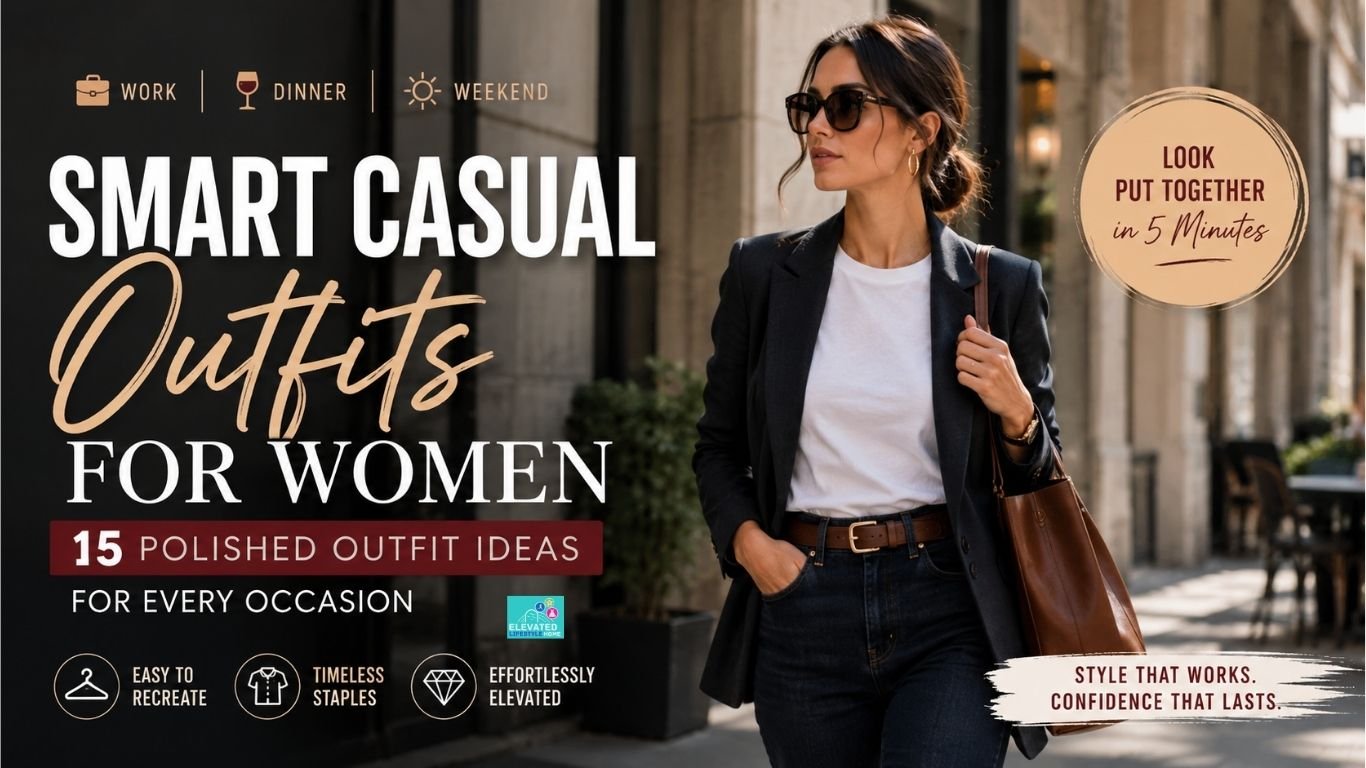
Layer a high-density white crew-neck tee underneath, tucked neatly to define your waist. Complete the look with pointed-toe suede flats or leather loafers and a structured leather tote.
This combination balances corporate structure with relaxed comfort, making it an essential option for hybrid workdays.
Tailored Wide-Leg Trousers and High-Density Knits
Style fluid, high-waisted wide-leg trousers in beige or olive with a fitted, ribbed knit top. The contrast between the fitted upper layer and the voluminous lower silhouette creates an elegant, elongating effect.
Accessorize with a sleek leather belt, medium gold hoop earrings, and clean leather court sneakers to ground the ensemble with modern, approachable sophistication.
15 Smart Casual Outfit Ideas for Women
Knowing the basic rules of smart casual dressing is helpful, but sometimes you simply need an outfit combination that works without spending 20 minutes standing in front of your closet.
These smart casual outfit ideas for women combine polished pieces with comfortable everyday staples, making them suitable for workdays, dinners, weekend plans, and casual social occasions.
1. Blazer + White Tee + Straight-Leg Jeans + Loafers
Pair a structured blazer with a clean white T-shirt and straight-leg jeans for an effortless smart casual combination. Add polished leather loafers and a simple belt to give the relaxed denim a more refined finish.
2. Wide-Leg Trousers + Fitted Knit + Flats
Balance wide-leg trousers with a fitted knit top to create a clean, proportional silhouette. Finish the outfit with pointed flats or simple ballet flats for a comfortable look that still feels polished enough for many office environments.
3. Button-Down Shirt + Tailored Trousers + Sneakers
A crisp button-down shirt instantly gives tailored trousers a polished foundation. Add minimalist leather sneakers to introduce a relaxed element without making the outfit look too casual.
4. Midi Dress + Structured Blazer + Flats
A simple midi dress can become a versatile smart casual outfit when layered with a structured blazer. Complete the look with polished flats and a structured handbag for an understated, put-together finish.
5. Dark Denim + Silk-Blend Blouse + Loafers
Dark, non-distressed denim works particularly well with more refined fabrics. Pair it with a silk-blend blouse, leather loafers, and minimal jewelry for an outfit that can transition from daytime plans to an informal dinner.
6. Knit Top + Midi Skirt + Ankle Boots
Combine a fitted or lightly structured knit top with a midi skirt for a feminine smart casual silhouette. Ankle boots add structure while keeping the outfit practical for cooler weather.
7. Linen Blazer + White Tee + Straight-Leg Jeans
For a relaxed daytime look, layer a lightweight linen blazer over a simple white tee and straight-leg jeans. Add leather flats or minimalist sneakers to keep the outfit comfortable without losing its polished appearance.
8. Monochrome Trousers + Knit Top + Leather Belt
Create a streamlined look by choosing trousers and a knit top in the same or closely related color family. A simple leather belt adds definition at the waist while keeping the overall outfit clean and sophisticated.
9. Sweater + Tailored Trousers + Ballet Flats
A soft sweater can look polished when paired with structured tailored trousers. Add ballet flats and a simple handbag for an easy smart casual combination that works particularly well for relaxed office days.
10. Blazer + Dark Denim + Pointed-Toe Flats
Pair a tailored blazer with dark, clean-cut denim and pointed-toe flats. The structured blazer and refined footwear elevate the casual nature of the jeans without making the outfit feel overly formal.
11. Polo Knit + Wide-Leg Trousers + Loafers
A polo-style knit gives a classic smart casual feel without requiring a button-down shirt. Wear it with wide-leg trousers and leather loafers for a balanced combination of relaxed texture and tailored structure.
12. Shirt Dress + Structured Bag + Flats
A shirt dress provides an easy one-piece foundation for a smart casual outfit. Add a structured bag and polished flats to create a simple look that requires minimal styling while still appearing intentional.
13. Fine Knit + Pleated Skirt + Ankle Boots
Pair a fine-gauge knit with a pleated midi skirt for a softer take on smart casual dressing. Ankle boots provide visual structure and make the combination particularly suitable for transitional seasons.
14. Dark Jeans + Blouse + Minimalist Sneakers
Choose dark, well-fitting jeans and pair them with a polished blouse. Clean, low-profile sneakers keep the outfit comfortable while maintaining enough structure for casual workplaces and everyday social settings.
15. Tailored Trousers + Cardigan + Leather Loafers
For a simple polished formula, combine tailored trousers with a fine cardigan and leather loafers. Tuck the cardigan slightly or define the waist with a slim belt to create a more intentional silhouette.
How to Make These Smart Casual Outfits Work for Different Occasions
The same outfit formula can often be adjusted for different settings without changing the entire look. For work, prioritize tailored trousers, structured blazers, polished loafers, and clean fabrics.
For dinner, switch to a refined blouse, pointed flats, subtle jewelry, or a structured bag. For weekend plans, replace a blazer with a relaxed knit or linen layer and choose minimalist sneakers or leather flats.
The key is to maintain a balance between polished structure and relaxed comfort. When one part of the outfit is casual, let another element provide refinement. For example, pair relaxed denim with a structured blazer, or balance tailored trousers with a softer knit top.
Common Styling Mistakes That Secretly Ruin Smart Casual Outfits
Even with high-quality foundational pieces in your closet, subtle daily oversights can quietly sabotage your appearance. Elevating your baseline requires identifying and eliminating these low-effort mistakes before they drain the intentionality from your ensemble.
Ignoring Fabric Maintenance and Garment Care
The fastest way to degrade an otherwise sophisticated outfit is wearing wrinkled, pilled, or improperly laundered garments.
Flimsy knits that lose their shape after two washes or trousers with deep storage creases immediately project an accidental, unstudied aesthetic.
Invest in a compact garment steamer, use lint rollers religiously, and store heavy knits folded rather than hung to preserve their shoulder architecture.
Over-Accessorizing and Visual Clutter
Attempting to elevate a simple look by piling on multiple statement pieces creates chaotic visual noise. Layering bulky scarves, heavy logo belts, stacked bangles, and patterned shoes simultaneously destroys the effortless quality of smart casual dressing.
Restraint is the hallmark of quiet refinement—limit your daily hardware to one or two high-quality focal points, such as a structured leather tote and clean gold hoops.
How to Balance Proportions in Smart Casual Outfits
Mastering advanced proportion rules transforms ordinary garments into tailored statements. Instead of relying on symmetric, predictable styling, modern refinement leverages strategic asymmetry and spatial distribution to flatter your natural frame.
Embrace the “Rule of Thirds” rather than dividing your body visually in half. Pairing a long, untucked shirt over mid-rise denim creates a heavy 1:1 proportion that shortens your legs and looks boxy.
By tucking your top to create a more elongated torso-to-leg proportion, you can visually lengthen the silhouette and make relaxed garments look more intentional.
Additionally, manipulate cuff heights—rolling your denim or trousers to expose the slim ankle bone creates a strategic break point that makes oversized coats and voluminous knits appear intentional rather than overwhelming.
Essential Smart Casual Wardrobe Staples
Curating an elevated wardrobe does not require an expansive closet. Focusing on a tight selection of high-yield, versatile staples ensures that every piece coordinates effortlessly with minimal daily decision friction:
- The Architectural Outerwear: A double-breasted wool overcoat in camel or charcoal, and a structured, unlined blazer.
- The Heavyweight Base Layers: High-density organic cotton crew-neck T-shirts in crisp white, ivory, and deep black.
- The Refined Tailored Bottoms: Straight-leg raw denim with zero distressing, and fluid, high-waisted wide-leg trousers.
- The Anchor Footwear: Clean leather court sneakers, sleek pointed-toe suede flats, and structured leather loafers.
- The Minimalist Hardware: A classic leather belt with a clean brass buckle, and a minimalist leather tote bag.
Building your collection around these foundational anchors makes daily outfit creation an automatic, seamless habit rather than a stressful morning chore.
If you prefer a simpler approach, you can also learn how to dress well in simple clothes by focusing on fit, proportion, and a few versatile wardrobe staples.
Want to make smart casual styling even easier? Download our free one-page checklist and use the five-minute framework to put together a polished everyday outfit without overthinking.
Conclusion: Reclaiming Daily Confidence Through Intentional Style
Mastering smart casual outfits for women is about finding the right balance between comfort, polish, and personal style.
It is a quiet, powerful commitment to honoring your personal standards every single day, regardless of how relaxed your schedule might be.
When you step into the world wearing clothes that balance tactile comfort with deliberate structure, your internal posture shifts immediately.
True style does not require loud logos or high-maintenance trends; it thrives on quiet intention, precise proportions, and the self-respect of thoughtful presentation.
Clear away the wardrobe friction, master your daily anchors, and move through your day with unshakeable, effortless clarity.
Own your presence—starting with the very first layer you put on today.
Smart casual outfits for women: Frequently asked questions
What is the difference between casual and smart casual outfits for women?
Casual outfits prioritize pure comfort without structural alignment, often featuring relaxed fits and unstudied basics. Smart casual outfits balance that same daily comfort with tailored structure, incorporating high-density fabrics, defined waistlines, and refined leather accessories.
How to dress smart casual for different occasions without changing your whole outfit?
Transitioning across events relies on shifting your footwear anchors, outerwear weight, and hardware accents rather than swapping base garments. Swapping daily leather court sneakers for pointed-toe suede mules and adding a structured blazer instantly elevates a daytime look for evening events.
What is the smart casual dress code for dinner?
The dinner dress code combines comfortable, fluid silhouettes with light-reflecting or structured accents. Pair high-waisted tailored wide-leg trousers with a silk-blend blouse or a crisp poplin button-down, completed with leather flats or mules and subtle metallic jewelry.
How to build a smart casual wardrobe for work on a budget?
Focus on maximizing proportion manipulation and fabric care across existing foundational pieces instead of buying new clothes. Elevate basic tees and trousers by applying a clean French tuck, rolling sleeves to reveal forearms, and matching metal hardware across belts and bags.
What are the best smart casual work outfits for women in hybrid offices?
A foolproof workplace option pairs a structured, unlined wool blazer with dark-wash raw denim and a high-density white crew-neck tee. Another elevated combination styles fluid wide-leg trousers with a fitted ribbed knit top and clean leather loafers.
How can I make relaxed denim look smart casual instead of sloppy?
Select mid-to-dark wash raw denim with zero distressing, raw hems, or faded patches. Ensure the jeans fit cleanly at the waist and pair them with tailored tops, a leather belt, and structured footwear to maintain clean lines.
Why do my smart casual outfits still look underdressed or plain?
Outfits look plain when they lack architectural tension, proper fabric maintenance, or coordinated accessories. Wearing wrinkled textiles, unhemmed trousers, or leaving tops untucked over mid-rise bottoms creates an unstructured 1:1 proportion that swallows your natural frame.
What footwear options work best for smart casual outfits for women?
Ideal footwear anchors include clean leather court sneakers, pointed-toe suede flats, structured leather loafers, and minimalist leather slides. These options ground relaxed garments with clean, intentional lines suitable for work and social settings.
How does the Rule of Thirds improve smart casual styling?
Tucking your top establishes an elongated 1:3 torso-to-leg ratio rather than dividing your silhouette in half with an untucked top. This simple spatial adjustment instantly highlights your waistline and makes relaxed garments look intentionally tailored.
How do color choices impact a smart casual aesthetic?
High-contrast, random color combinations break your visual line and create unnecessary visual clutter. Adopting monochromatic or tonal color columns—such as pairing cream trousers with an oatmeal knit—creates an unbroken line that elongates your silhouette and projects quiet refinement.
How can you look smart casual without wearing heels?
Opt for structured, elevated flat footwear like pointed-toe suede mules, polished leather loafers, or clean court sneakers. Pair them with tailored, high-waisted trousers and defined waistlines to maintain crisp proportions without sacrificing comfort.
What is the smart casual dress code for women?
The smart casual dress code balances polished tailoring with relaxed daily comfort. It combines structured wardrobe anchors—such as blazers, tailored trousers, or crisp button-downs—with casual base layers like high-density tees or dark raw denim.
How to wear sneakers for smart casual events?
Choose minimalist, low-profile leather court sneakers in crisp white, ivory, or black, ensuring they are spotless and scuff-free. Style them alongside tailored trousers or a dark-wash raw denim ensemble to balance sporty ease with refined structure.
Why do my smart casual outfits look overdressed?
Outfits look overdressed when too many rigid or formal elements—like structured suits, heavy jewelry, high heels, and stiff fabrics—are combined at once. Introduce relaxed contrast by pairing tailored pieces with soft cotton tees or casual flat footwear.
What is your go-to outfit combination when you need to navigate a smart casual dress code in under five minutes? Drop a comment below and share your daily wardrobe formulas with us.
